 0% finance available


















A Stage 1 remap takes the GR Yaris from 261PS and 360Nm to around 305PS and 400Nm on our rolling road, with no hardware changes. Beyond that the G16E responds to hardware in a way few small engines do, and going further is about what you fit before the file rather than the file itself. We ran a GR Yaris as a development car, which is why we know where this engine likes to be rather than guessing from a supplier's table.
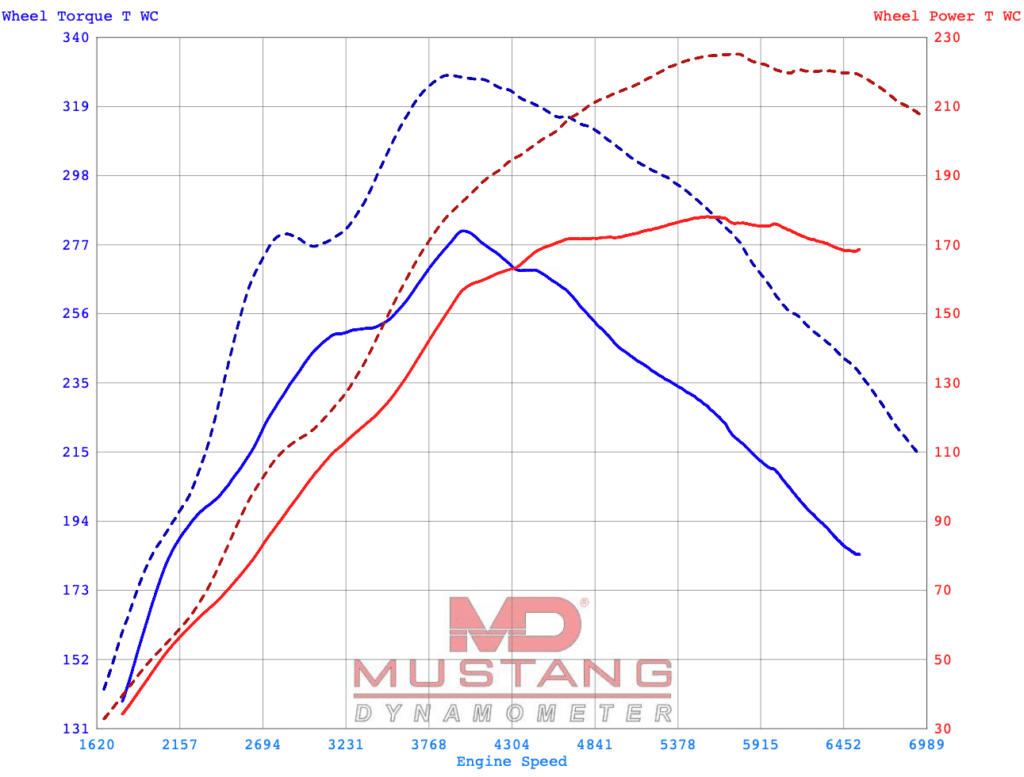 Measured on our Mustang AWD rolling road in Maidstone. Wheel figures, drivetrain loss added for the flywheel numbers.
Nothing Beats This On Track!
Introduction
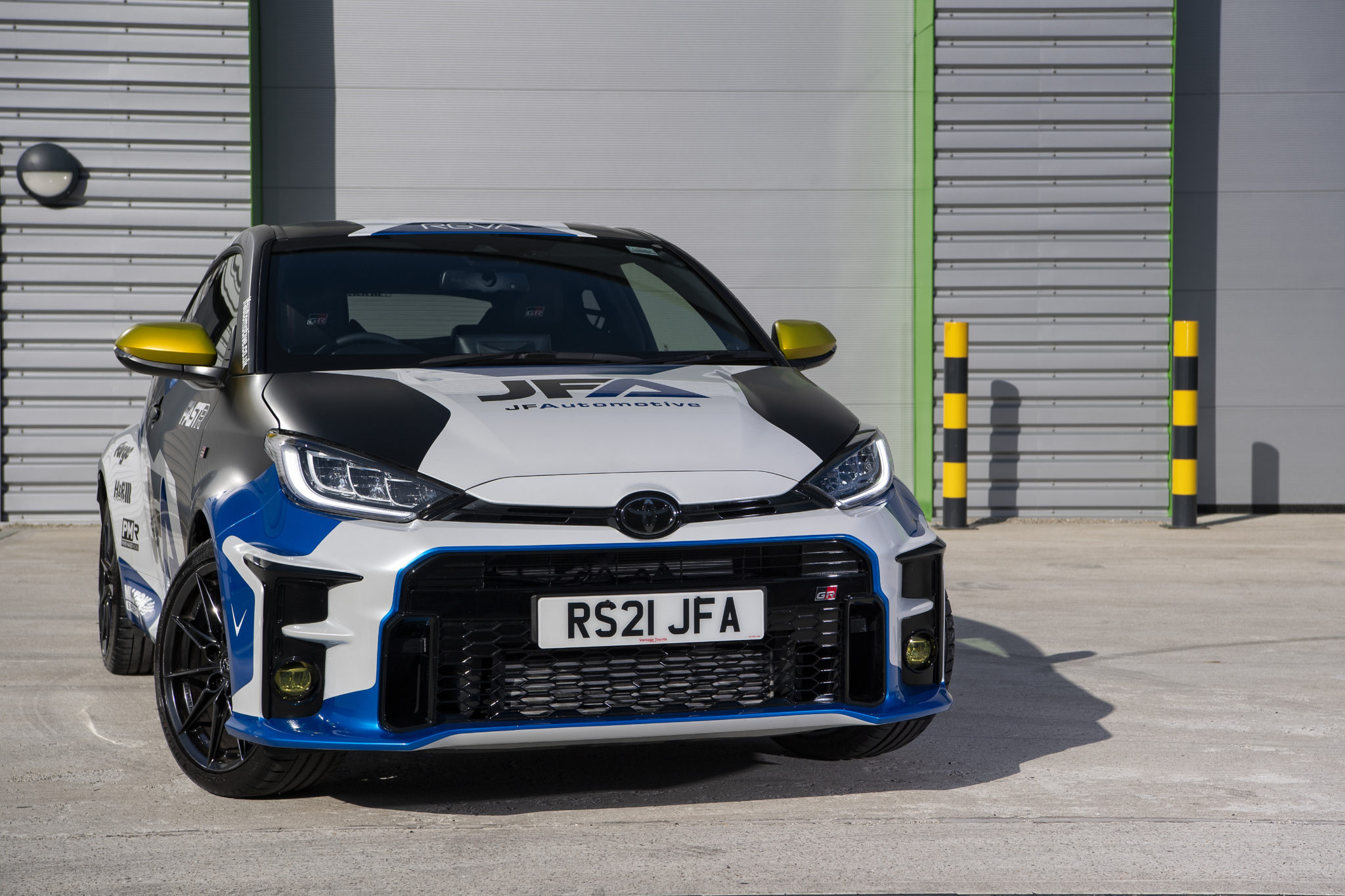
JF Automotive is a leading automotive ECU remapping and tuning company specialising in optimising vehicle performance. In this case study, we explore the results of our ECU remapping efforts on the Toyota Yaris GR, a powerful 4WD sub-1,280KG hot hatch.
Yaris GR Stock findings
257HP out of the box is already very impressive for a 4WD sub-1,280KG hot hatch. That being said, we couldn’t resist pushing more out of this 1.6 3-pot! When we run the car stock on our dyno, we found Toyota were actually being conservative with their figures! We saw power peaking at 263 HP and 374 Nm Torque! Although another 6 HP over the quoted factory figures isn’t huge, nobody is complaining about getting more than expected!
Dyno Data Logs
At JF Automotive, we take pride in our meticulous approach to custom tuning. Our purpose-built dyno development centre is where we painstakingly fine-tune and perfect every aspect of the tune. Our process involves the following steps:
- Data Logging: During the initial dyno runs, we thoroughly data log various engine parameters. This data serves as a foundation for our subsequent tuning efforts.
- Comparison and Analysis: With the data in hand, we meticulously compare the stock programming in the engine ECU with our data logs. This step allows us to identify areas for improvement and helps us to craft a tailored solution.
- Base Tune Development: Using the insights gained from the data logs, we create a base tune and test it on the Yaris GR. This iterative process continues as we monitor and log the engine’s performance to ensure safety and reliability.
- Fine-Tuning and Optimisation: This stage involves countless hours of fine-tuning the ECU’s parameters until we achieve a healthy and efficient balance between performance and safety. Our ultimate goal is to deliver the power we aimed for without compromising the engine’s reliability
In conclusion, our work on the Toyota Yaris GR has demonstrated the significant potential for improving performance through ECU remapping. By leveraging our expertise, purpose-built dyno facility, and dedication to precision tuning, we were able to unleash additional power and torque, exceeding the manufacturer’s quoted figures. At JF Automotive, we are committed to helping our customers unlock the full potential of their vehicles while maintaining the utmost attention to safety and performance.
JFA310 Package – 300-310BHP / 400Nm
- JFA Engine Tune
- Intake Kit – Eventuri in this study.
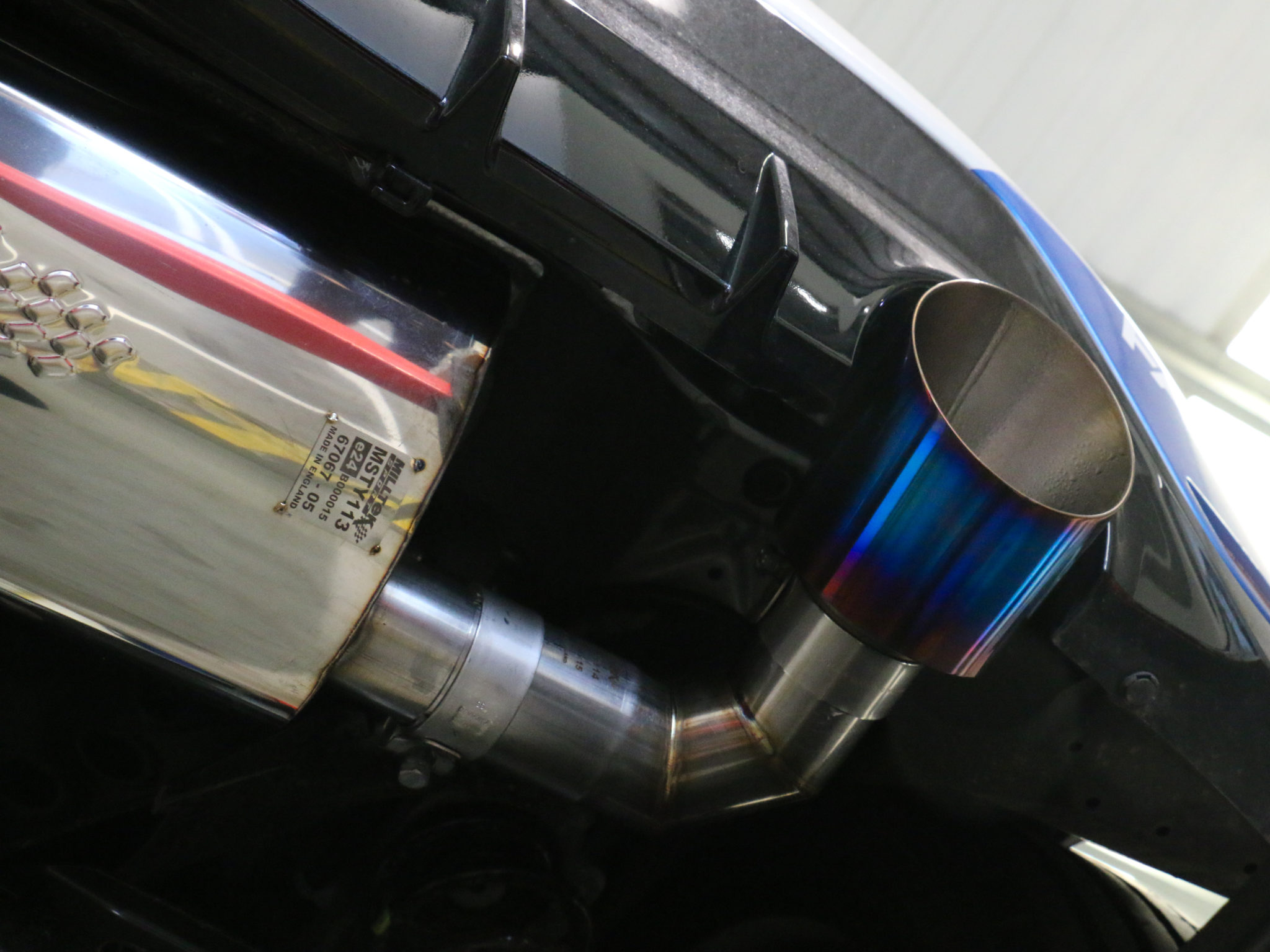
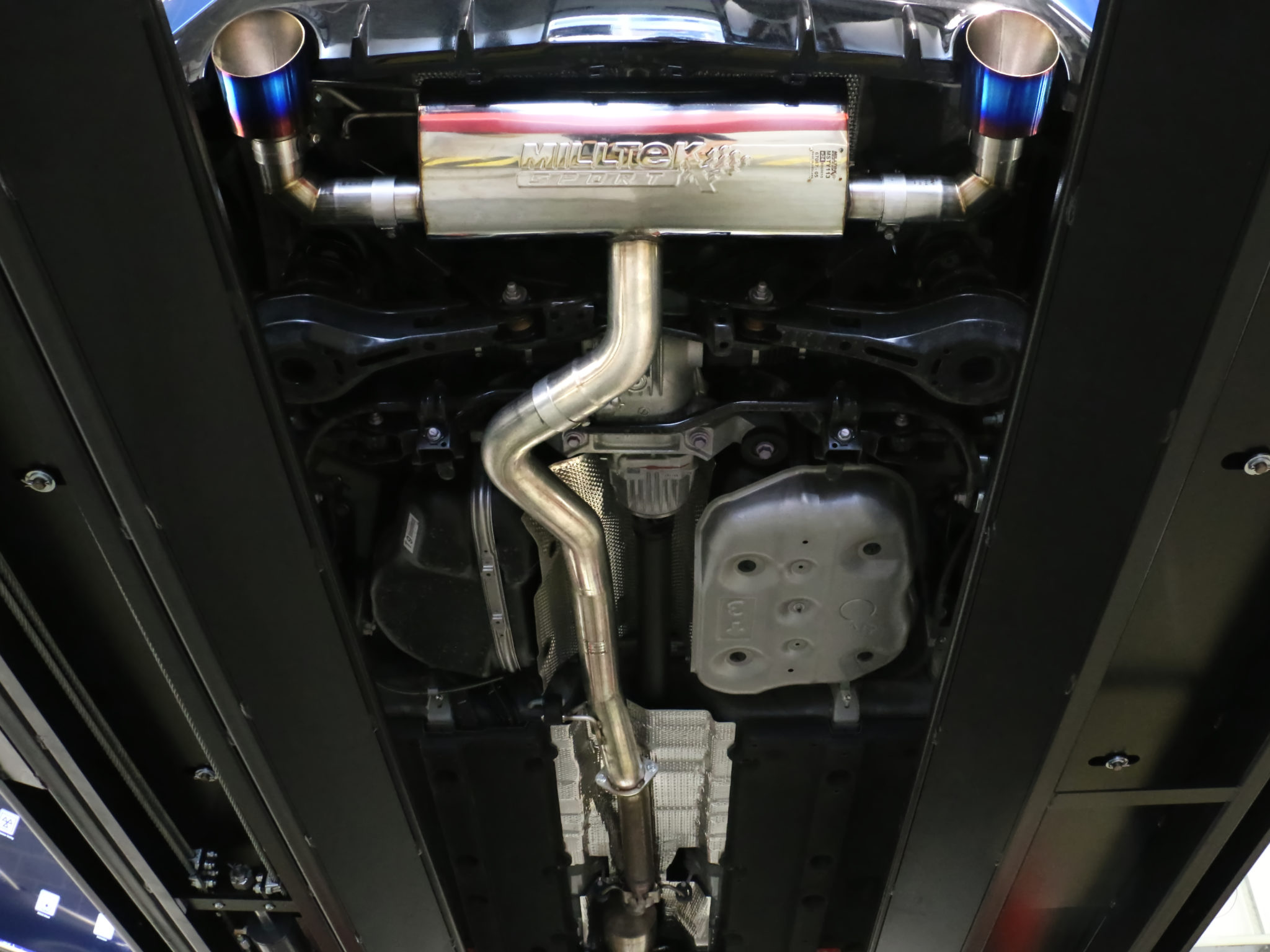
- GPF Back Exhaust – Milltek in this study.
JFA330 Package – 325-335BHP / 430Nm
- JFA Engine Tune
- Intake Kit – Eventuri in this study.
- GPF and Cat Delete – Milltek in this study.
- GPF Back Exhaust – Milltek in this study.
JFA370 Package – 370-375BHP / 500-515Nm
- JFA Engine Tune
- Intake Kit – Eventuri in this study.
- GPF and Cat Delete – Milltek in this study.
- GPF Back Exhaust – Milltek in this study.
- Camshaft & Valve Spring Upgrade.
JFA400 Package – 500BHP / 530Nm
- COMING SOON
JFA Extras
Suspension
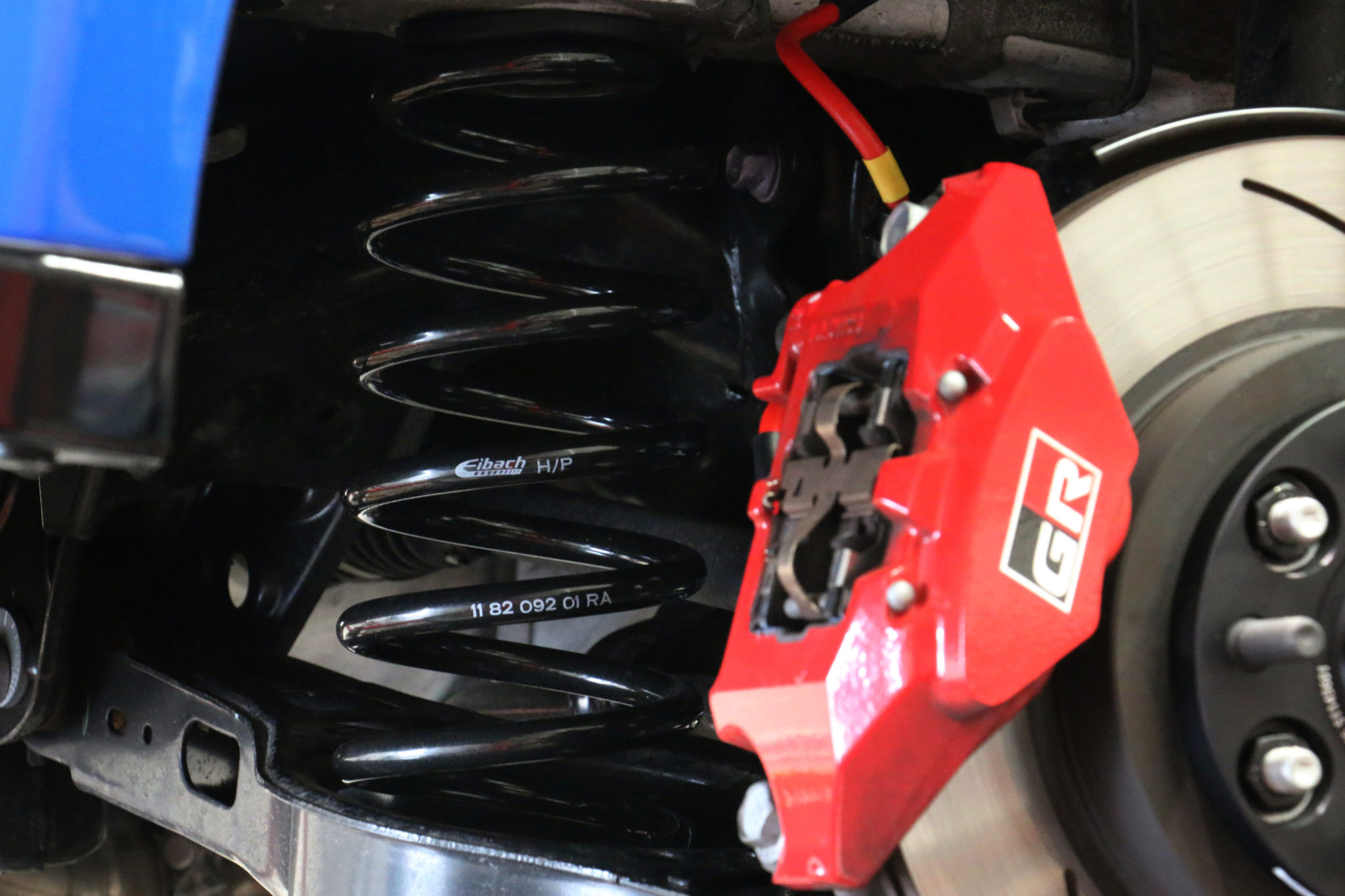
We are running Eibach springs on ours which lowers the front by 30mm and 25mm on the rear. This lowers the overall centre of gravity and removes some of the body roll for track use. The overall ride is still very disciplined for road use too.
Lower Seat
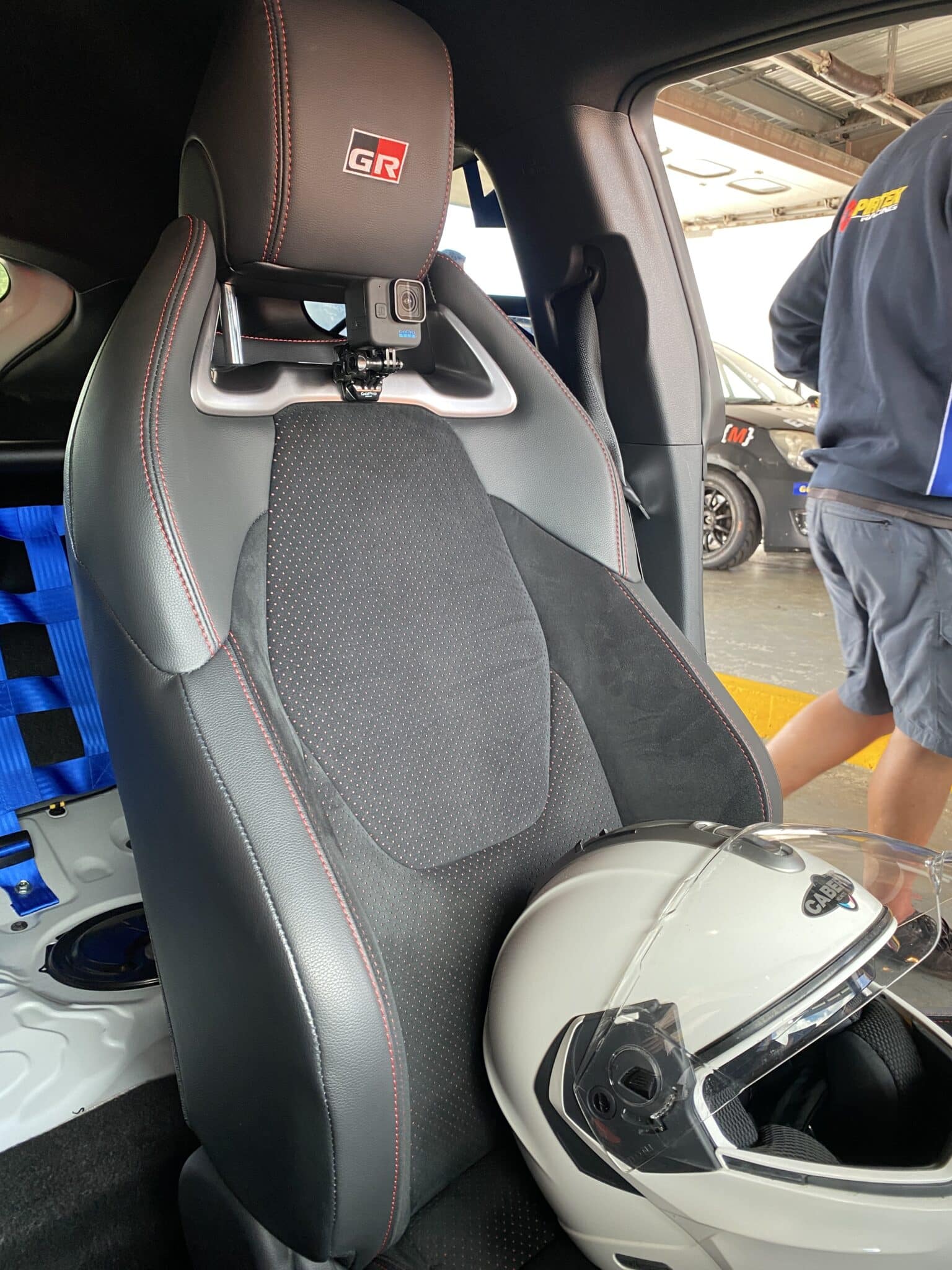
The drivers seat sits very high and we felt this was too high for anyone over 5ft 7. We now have fitted a lower seat rail that puts you right behind the wheel. The Toyota height and slide adjustment still work to get the perfect driving position.
Oil
We are running Liqui Moly Ceratec engine protection along with either Liqui Moly or Rowe engine oil. For the track day we was running Rowe Oil with a genuine oil filter. All work carried out in our workshops.
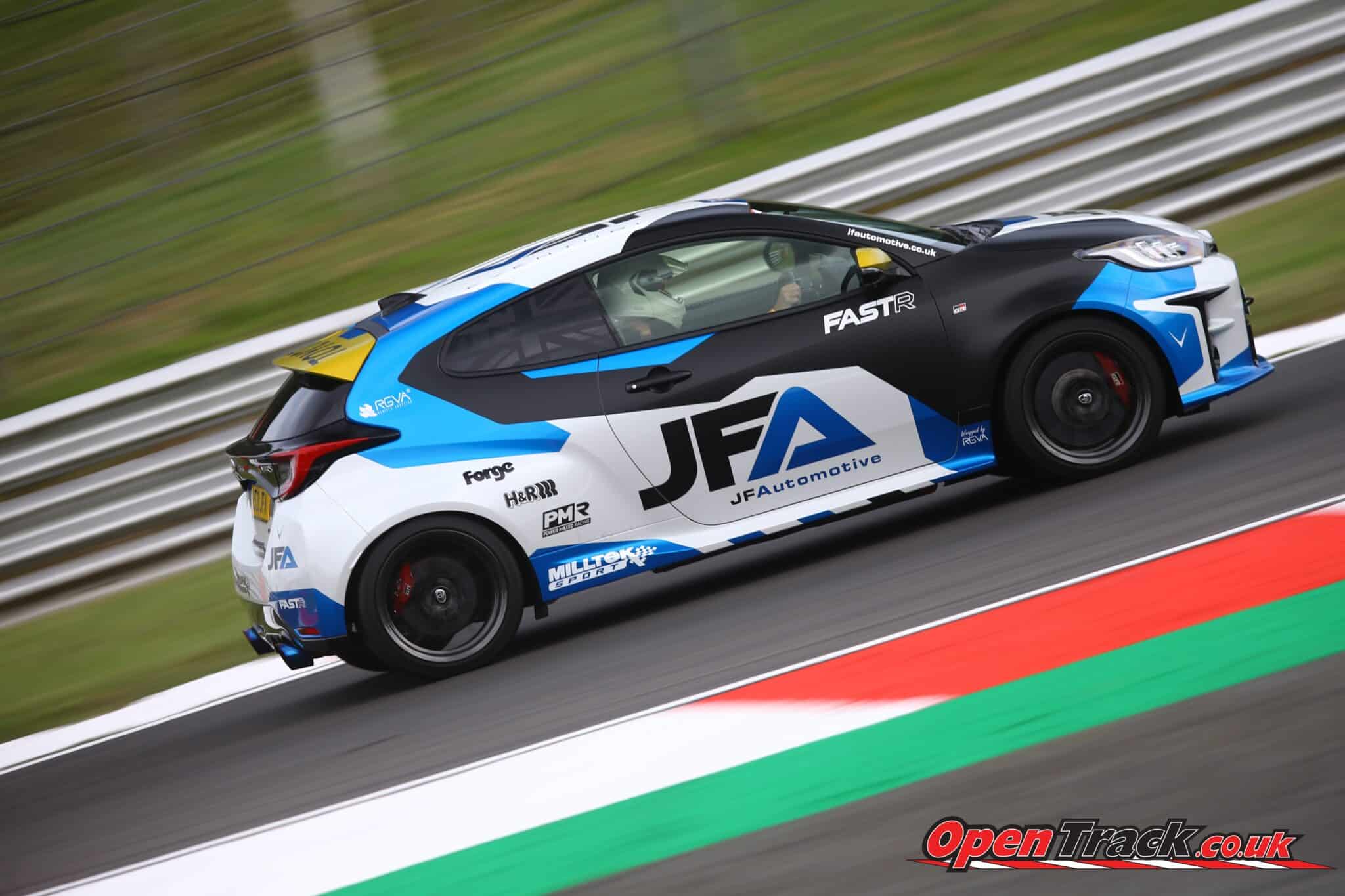
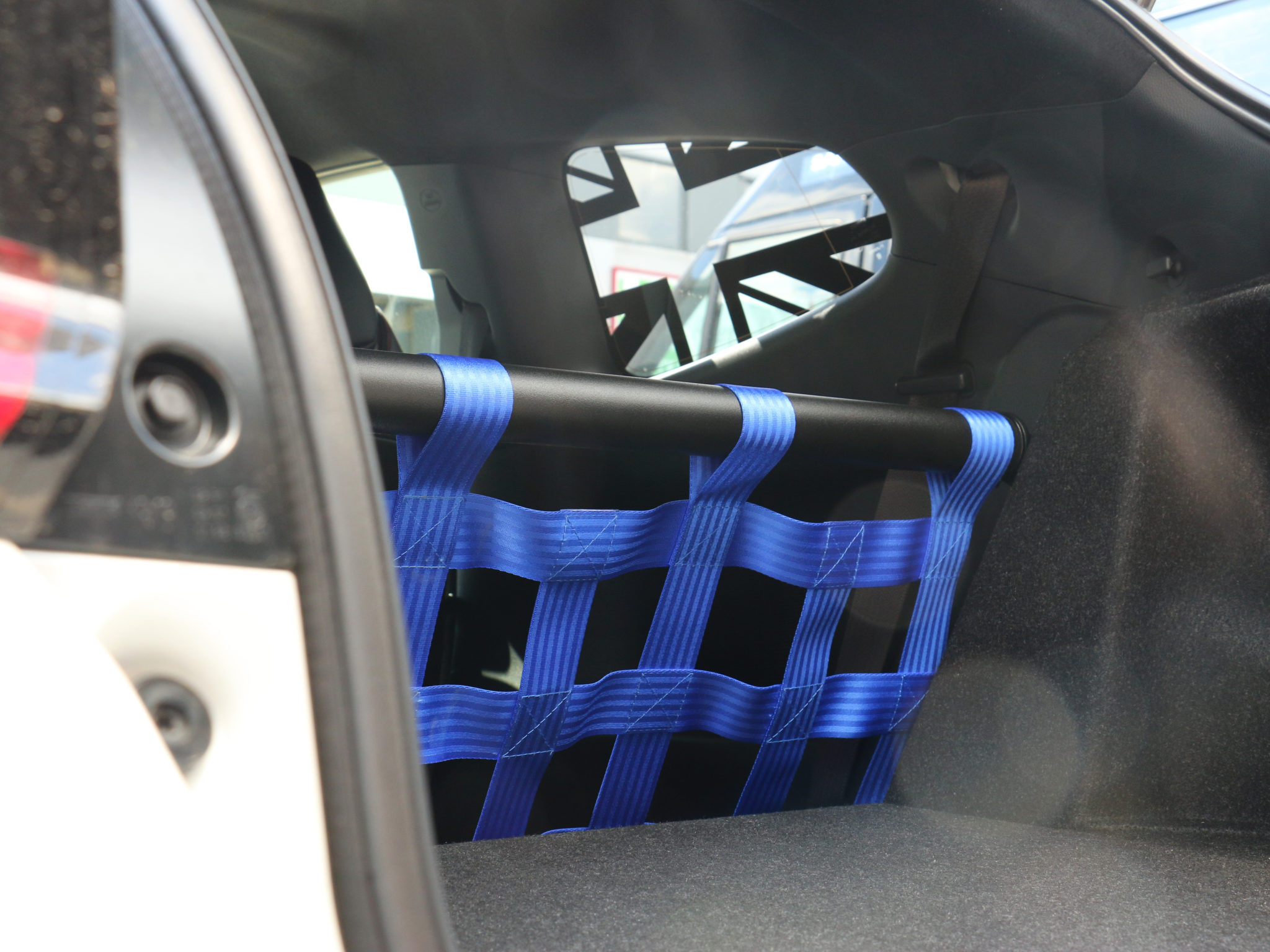
Photos from the build
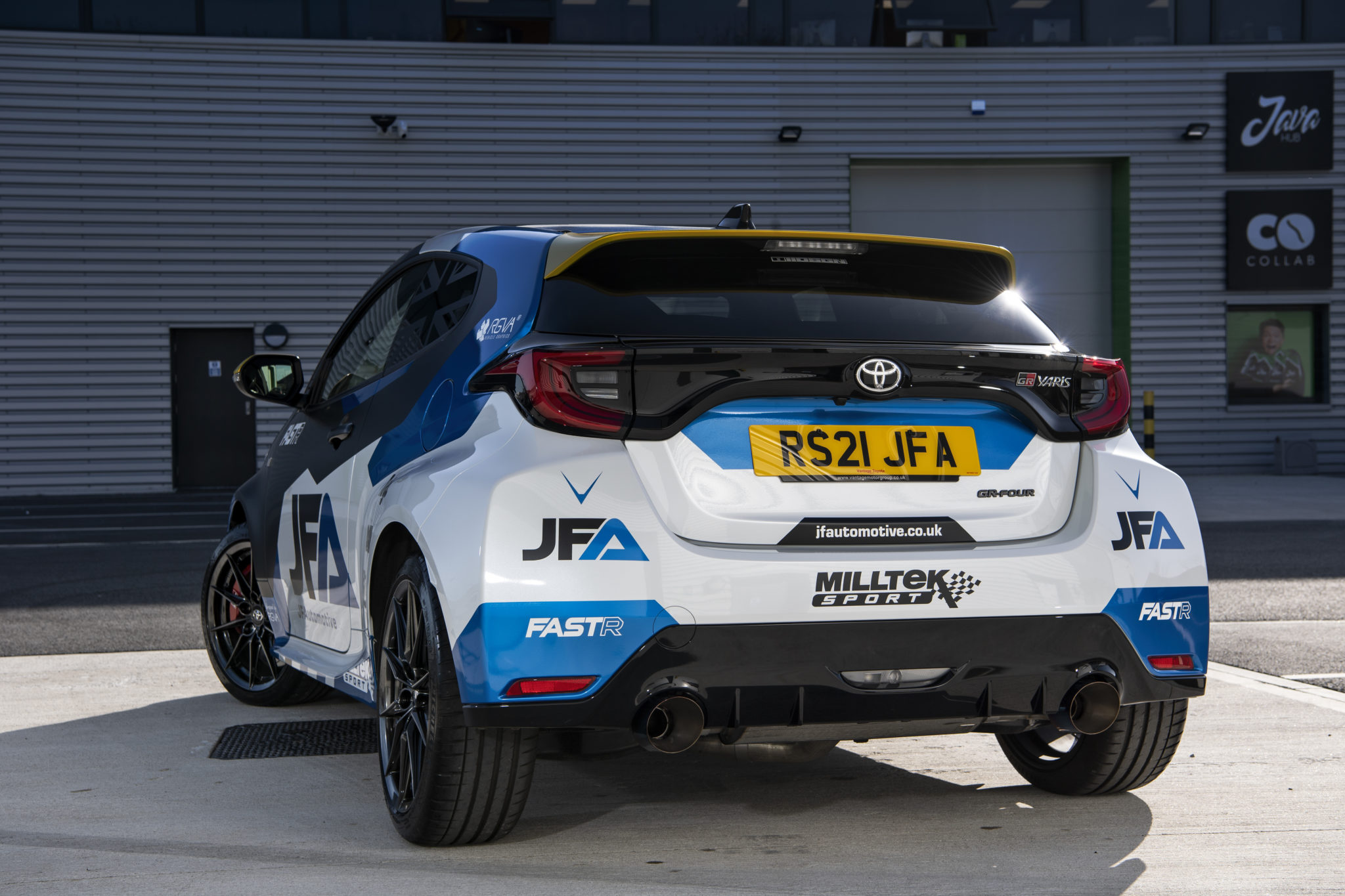
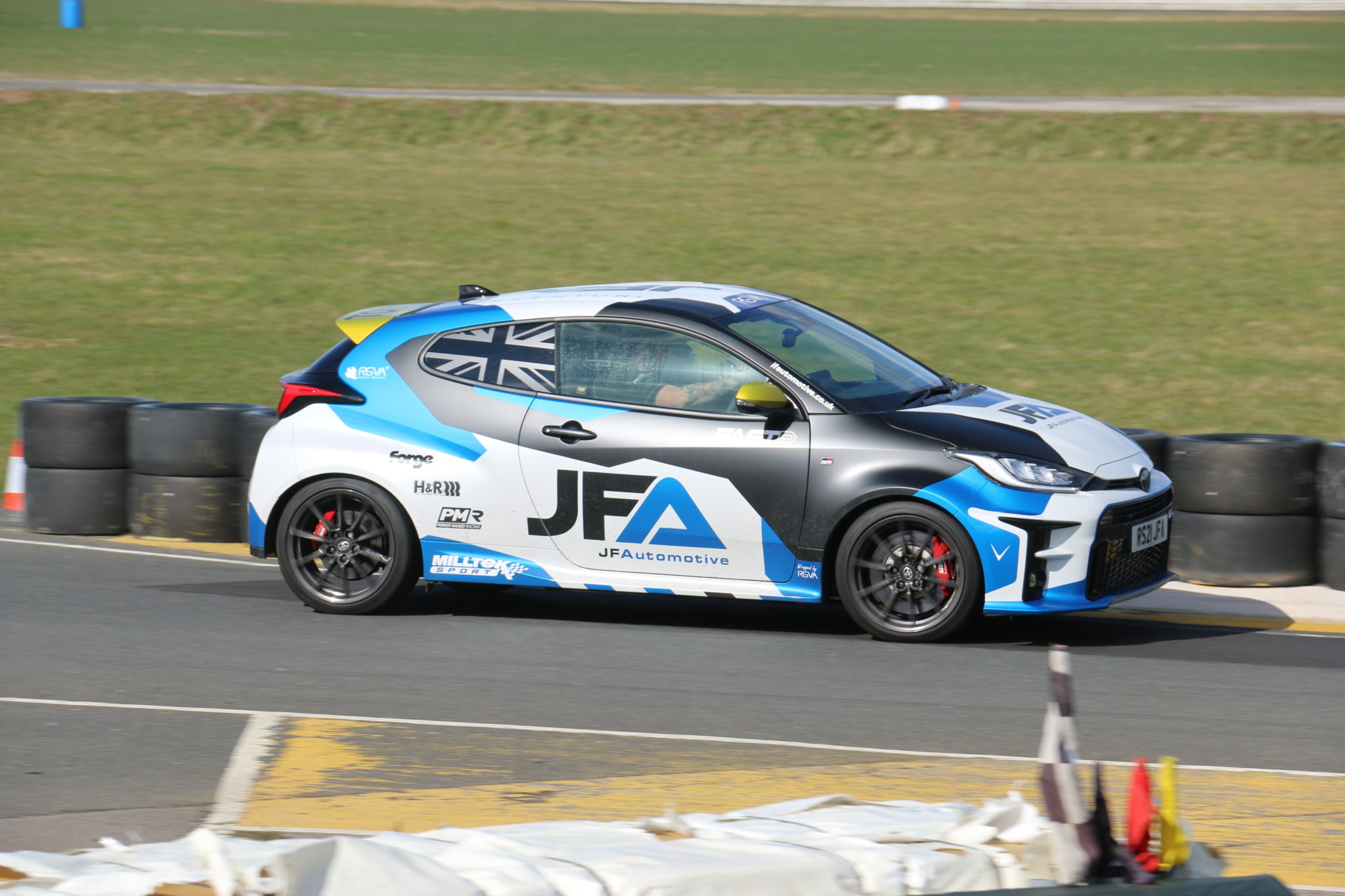
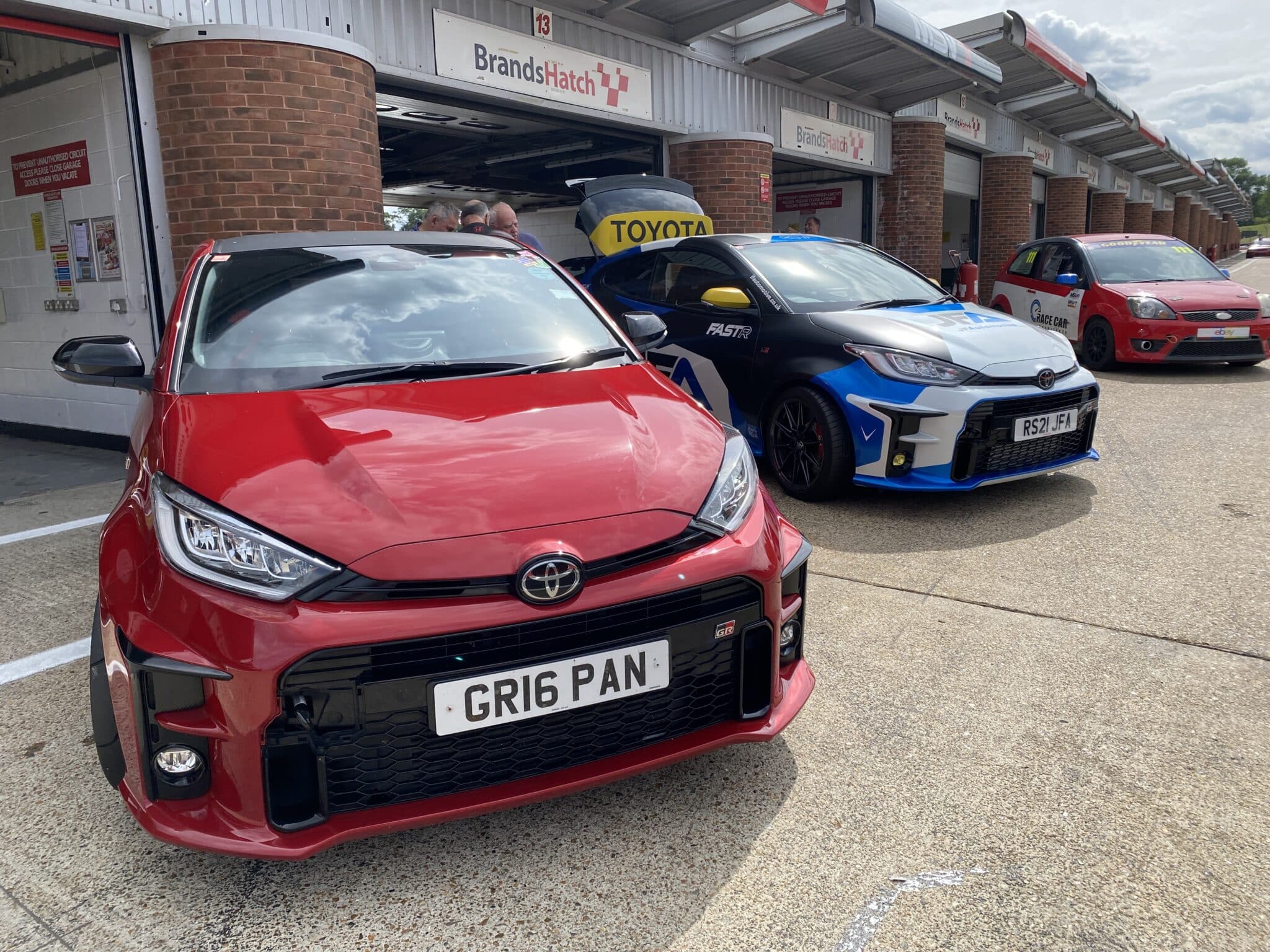
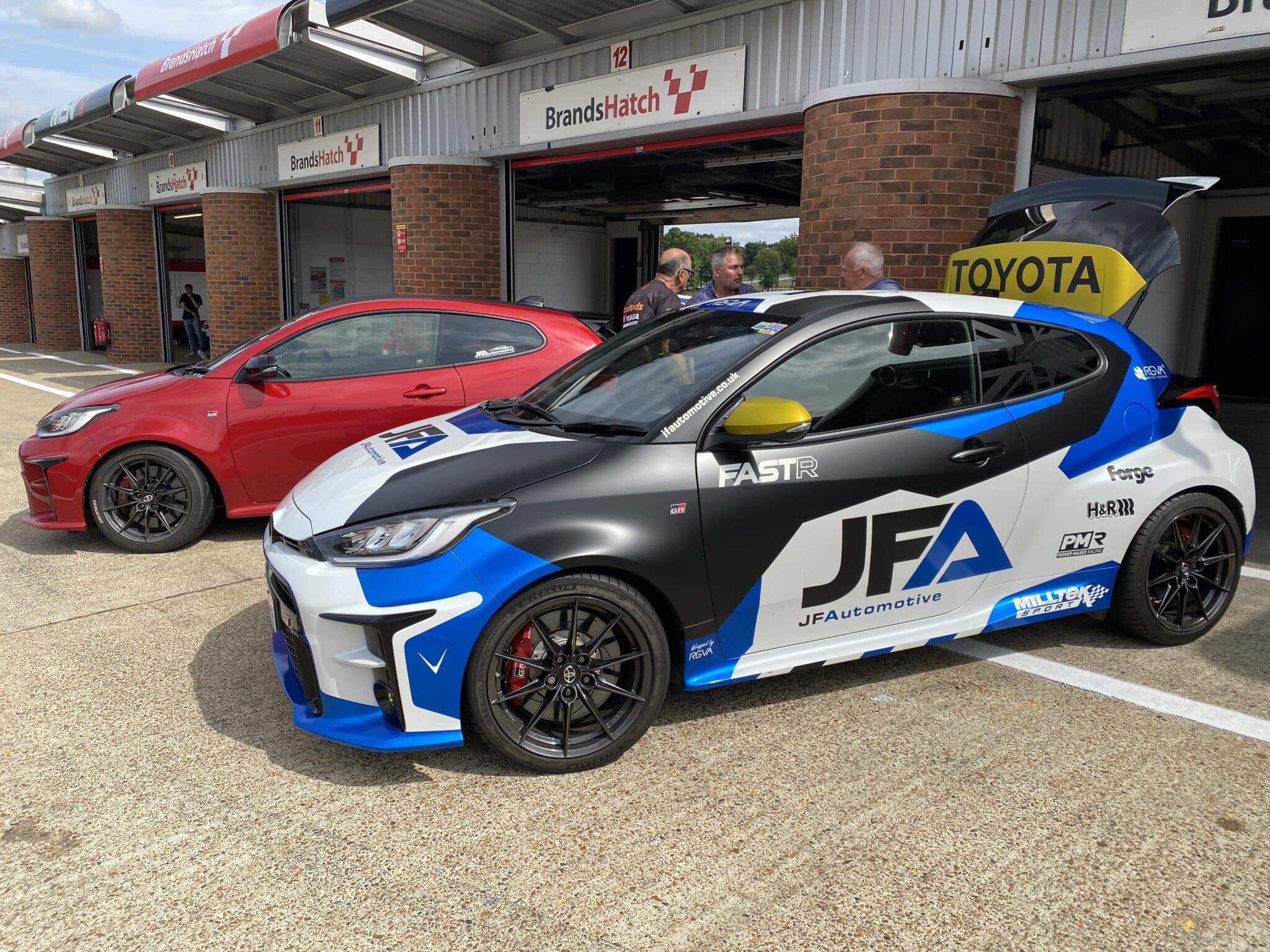
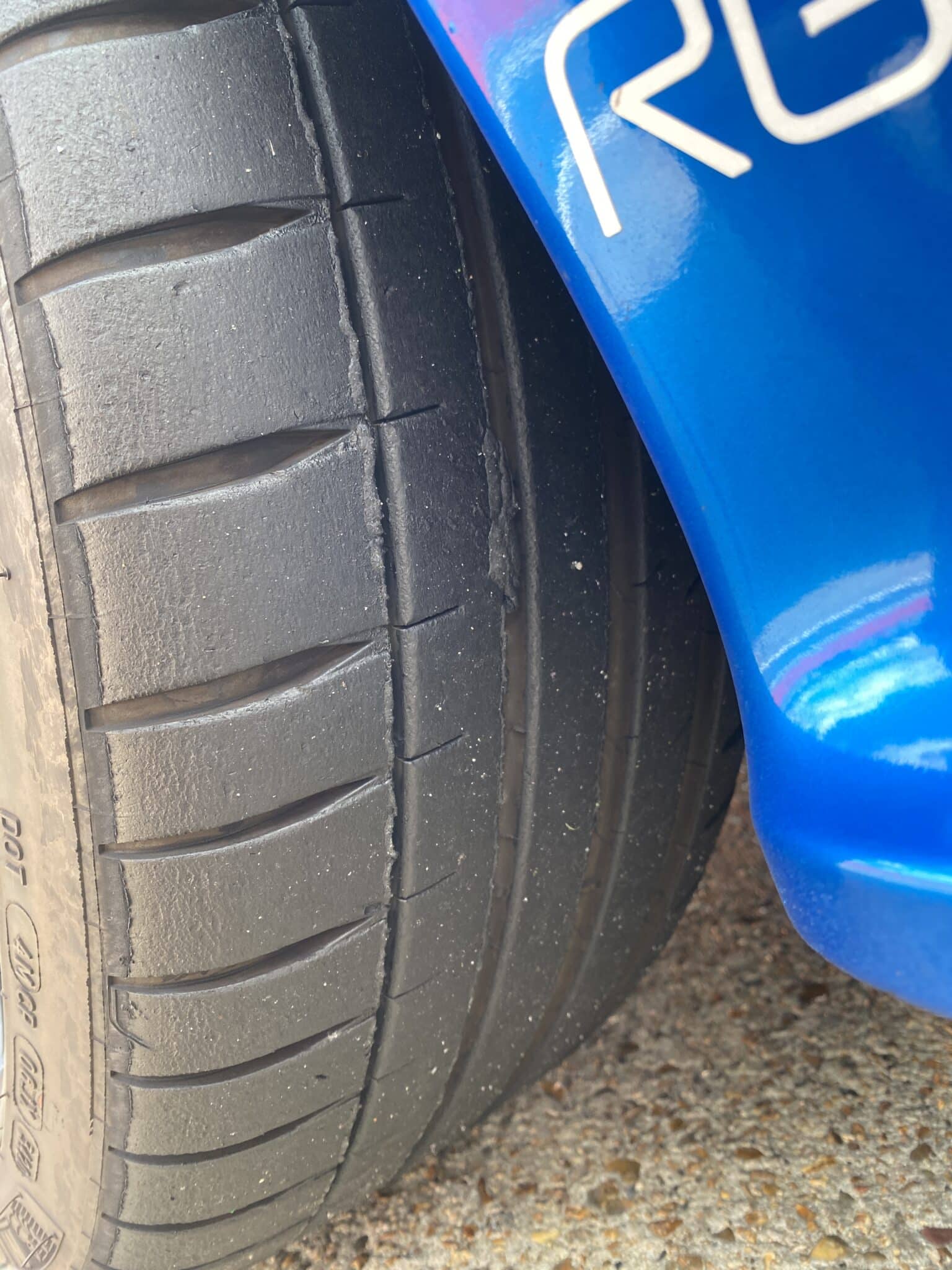
14 photos of this Toyota Yaris 2020 - in our Maidstone workshop. Tap any to enlarge.

Questions we get asked
How much power does a GR Yaris Stage 1 make?
Around 305PS and 400Nm from a standard 261PS and 360Nm, on our dyno and on standard hardware. That is roughly +44PS and +40Nm, and the torque arriving earlier is what changes the way it drives.
What does GR Yaris Stage 2 need?
A less restrictive exhaust and intake, and a file written around them. Hardware on its own does very little on this engine; almost all of the gain comes from the calibration that follows it. Tell us what is fitted and we will give you a realistic figure before you spend.
What about Stage 3?
That is a turbo and supporting hardware, and it becomes a project rather than an appointment. It is doable and we will talk it through honestly, including whether your car and your budget are a sensible base for one.
Is it safe to tune?
On a healthy standard car, yes. It is a small, hard-worked three-cylinder, so we do not chase the largest possible number: the file keeps knock margin and temperatures where they should be, and it is proven on the dyno rather than on the road.
Does it affect the GR-Four four-wheel drive?
No. The engine ECU is separate and the centre coupling behaves exactly as it did, including the Normal, Track and Sport settings. What the car does with the power is unchanged; there is just more of it.
How quick is a GR Yaris, standard?
Toyota quotes 0 to 62mph in 5.5 seconds for the 261PS car and 5.2 for the 2024 280PS facelift. We have written those figures up separately if the standard performance is what you are after rather than tuning.
