 0% finance available


















The BWA is the 200PS 2.0 TFSI that Volkswagen launched around 2005, best known from the Mk5 Golf GTI and Mk2 Leon FR. It is one of the cheapest ways into a genuinely quick car, but only once two known weak points are dealt with: the PCV breather valve and the diverter valve, both of which fail with age and cost you boost. Sorted and serviced properly, software alone takes a standard BWA from 200PS and 280Nm to around 240PS and 360Nm, and a careful budget parts list gets it past 265bhp.
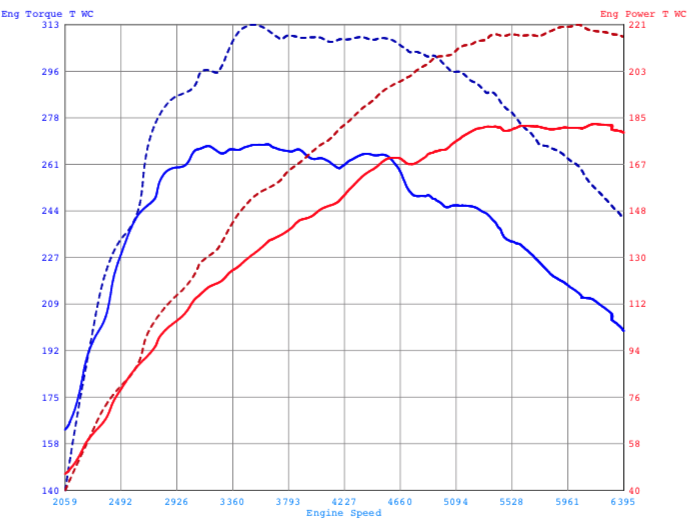 Measured on our Mustang AWD rolling road in Maidstone. Wheel figures, drivetrain loss added for the flywheel numbers.
The VAG 2.0TFSi engines launched around 2005, and very quickly proved themselves a brilliant candidate for tuning. With these cars getting older and more affordable, they’ve made a brilliant basis for a budget performance build. The 2.0TFSi engine is the 200BHP unit found in the Mk5 Golf GTi & Mk2 Leon FR – the most commonly available power-plant, and the one we’ll be focusing on with this article.
Maintenance on the 2.0TFSi
All engines of this age are going to have faults. It’s pretty much a given, so the first step of building a quick BWA is to get it running right first! Firstly, a full service, replacing oil with Millers 5w40 & OE sparkplugs. It’s really important to get the right plugs in it, the VW ones are expensive but worth every penny. Ignition timing is power, and a poor quality, or fake sparkplug from eBay will severely hurt final figures. This ought to cost around £100 all in if you DIY it.
Faults
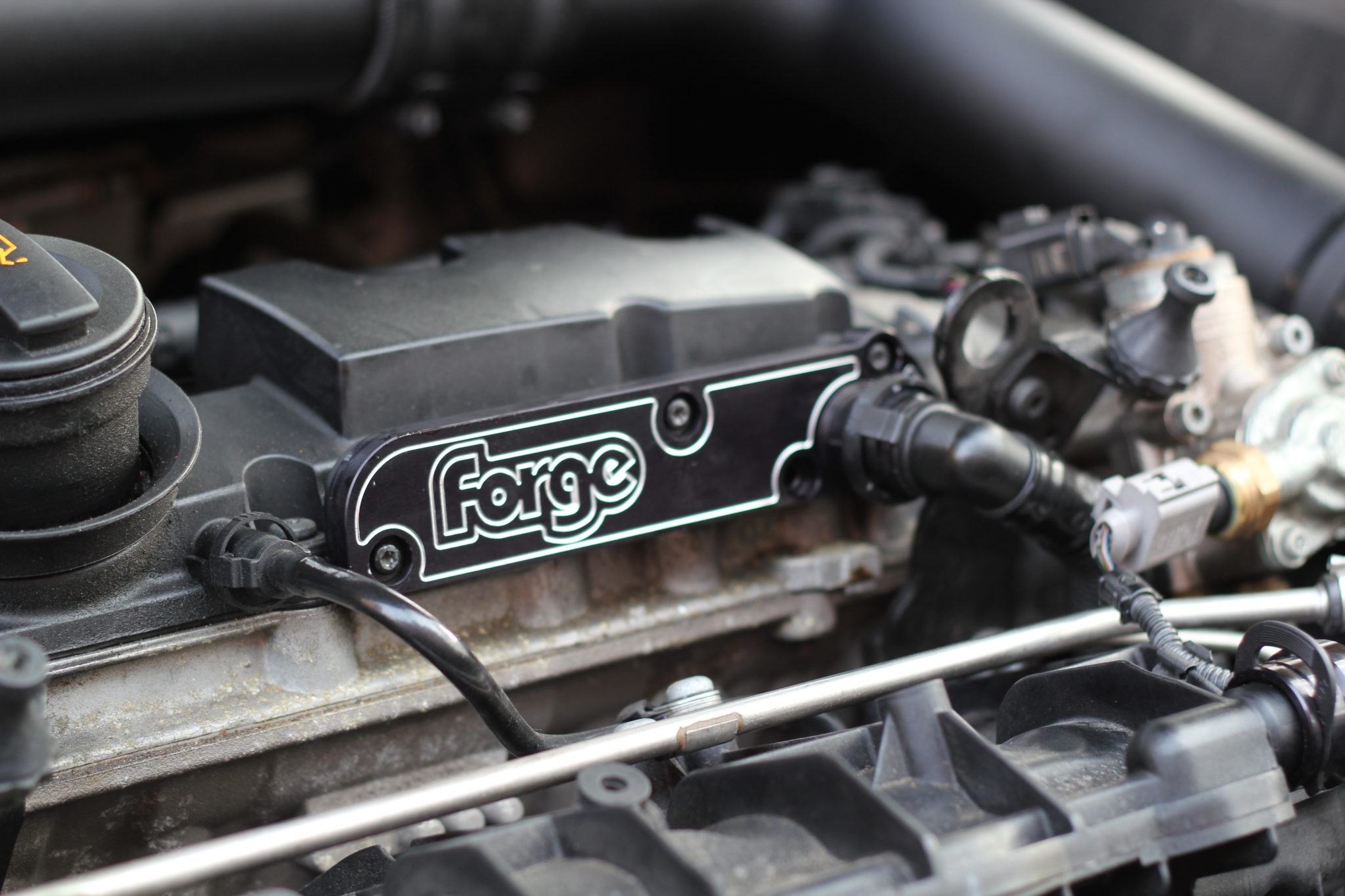
2.0TFSi engines suffer from two major fail points. Firstly the PCV valve, a breather to the top of the engine. Forge Motorsport produce a brilliant delete kit that does away with this completely, for around £60-70. Secondly, the diverter valve – this dumps excess boost pressure, so failure here will result in a loss of boost pressure. This ones really important to sort! There’s a few revisions of the part from VW at around £40, or you can fit a GFB DV+ for around £110 which replaces the rubber diaphragm with a brass piston that won’t split!
Performance hardware
The key here is to replace the bare minimum required to get more power out of the engine – there’s no point spending hundreds to get 1-2bhp on a budget build!
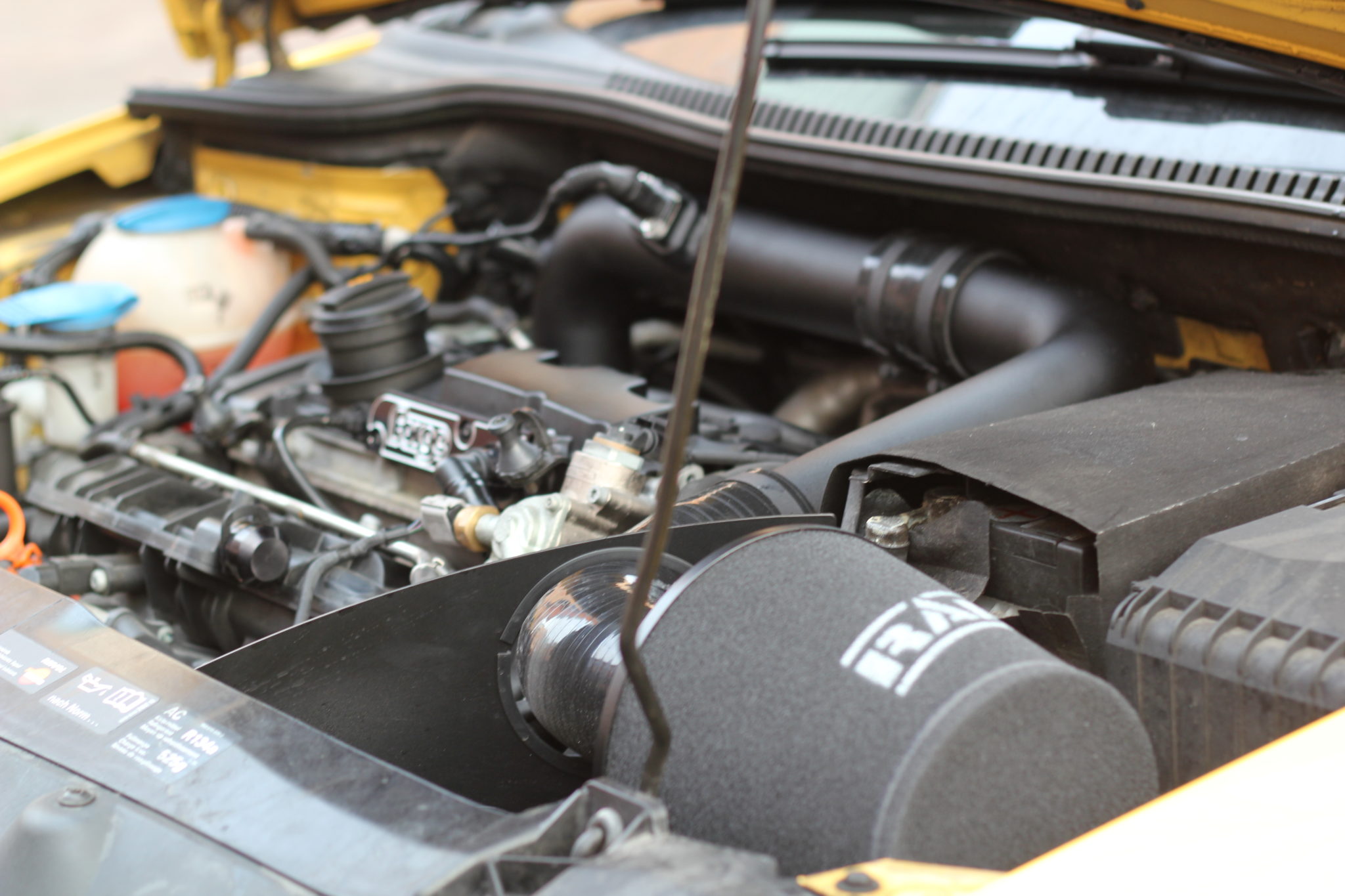
The stock airbox is small, restrictive and also it sits directly on top of the engine. This doesn’t help with the intake temps at all, so replacing this with an induction kit is a must. We prefer the Ramair kit as a budget freindly option – it’s simple, works, and sounds great. For £160 it’s a winner!
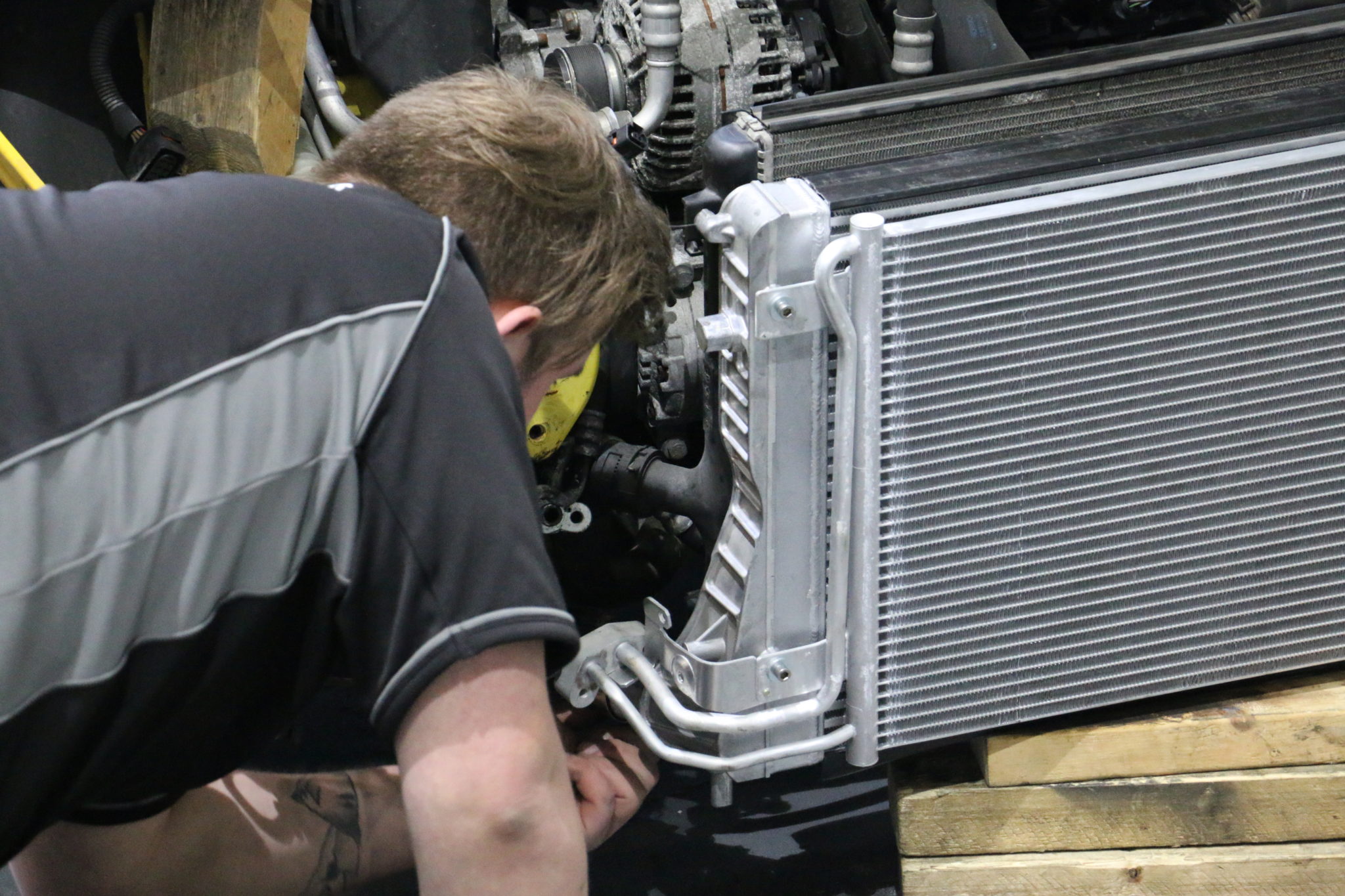
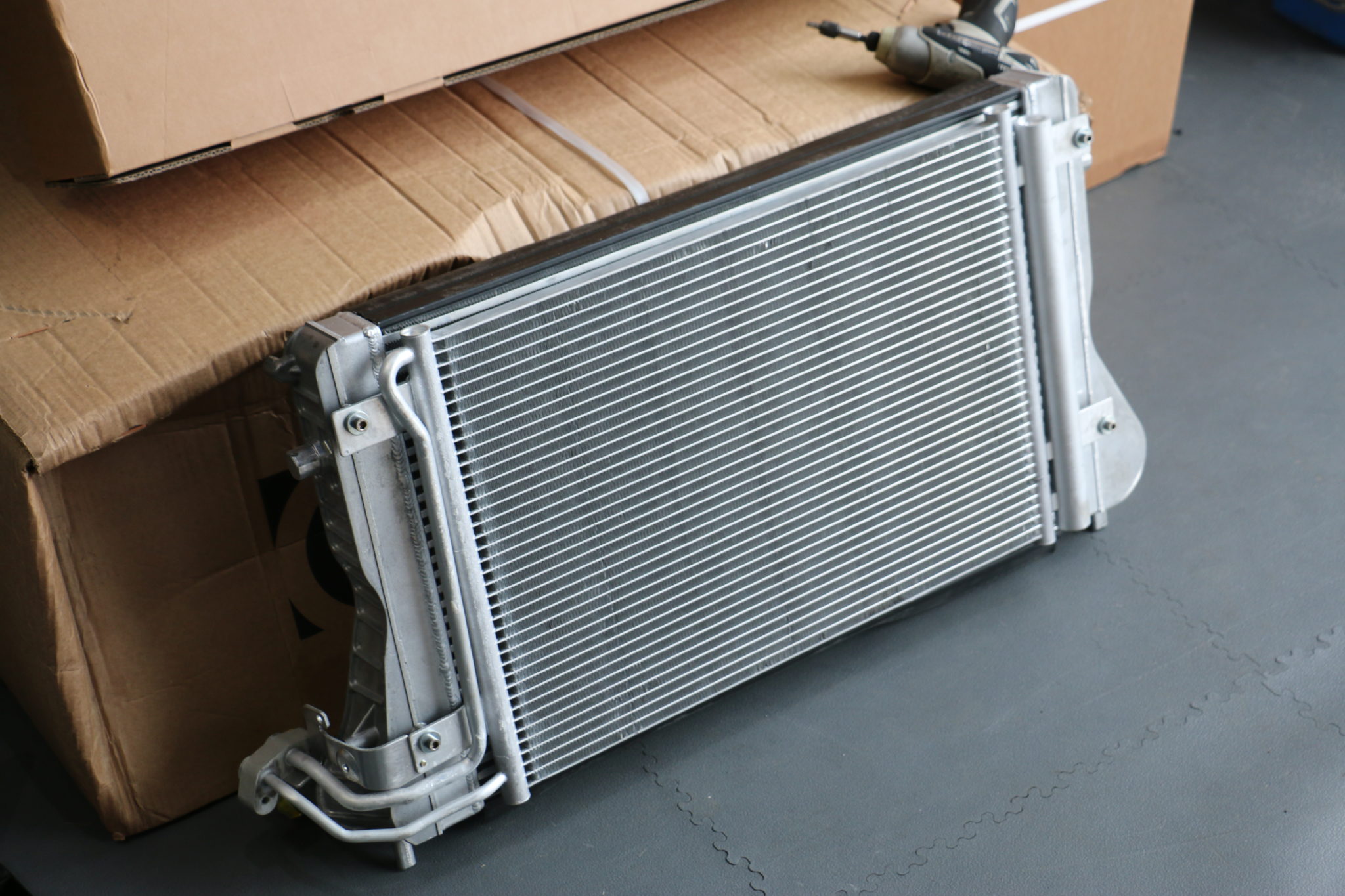
The TFSi engine runs hot, so an intercooler upgrade is a must. There are a lot of options out there, but the cheapest by far is to use an Audi S3 intercooler. This larger alloy core makes for dramatically lower intake temps, you can pick these up from your local motor factor for less than £300 as a brand new part. New hoses aren’t necessary as the quick release connectors from the old hoses can be cut.
The 2.0TFSi has two catalysts, a primary and a secondary. This makes it quite a restrictive item and a massive heat trap, so a de-cat is ideal. Budget downpipes are availible from eBay, however the one we tried whilst writing this case study had absolutely awful fitment and required a trip to an exhaust fabricator to weld the brackets back on in the correct place…however, it was only £90…proof that you really do get what you pay for & certainly not a part we’d supply for a customers car. We’re unsure how long this is going to last, and would strongly recommend a nicer quality item from Miltek if the budget permits.
Tuning
Onto the dyno, this 98,000 mile vehicle with less than £750 of performance parts suprised us – Usually a Stage 2 build using premium quality parts would cost upwards of £2,500! After extensive datalogging, the car produced 265BHP & 377Nm. Our dyno is very, very harsh on power figures so this is a pretty good result considering it is built with cheap parts. We also installed our O2 delete software to remove the EML light from the decat, and removed the speed limiter to unlock the full potential of the vehicle.
Testing the modified 2.0TFSi
On the road the car drives like a much more modern vehicle with the increases in power. The stability control isn’t as clever as a modern vehicle, but we’ve only really addressed the engine – and it certainly feels like a modern hot hatch at this power level. Drive-ability, reliability and fuel economy are not compromised. We took it to a local track to really push the car to the limits against a few similar cars – including the Mk7 Clubsport with its ‘Overboost’ function offering 280BHP for a short amount of time!
Conclusion
So, did it beat the Mk7 Golf Clubsport? No. The Golf took it by 0.1 of a second – but given a Mk7 Clubsport will cost you £30,000 you’d expect more of a gap! Both cars did have a manual transmission, making it a fair comparison. The DSG variant with its launch control would present a bit more of a challenge!
It’s a nice cheap set of mods. A competent DIY’er ought to be able to source and install themselves with basic tools. We can supply just parts for the home builder if required. We do think the MK5 Golf/Mk2 Leon makes a great platform for a quick road car. In the sub £3k pricepoint, there’s not a lot else you can modify to offer the same levels of performance for such a small outlay on parts.
275BHP ought to be possible, but another very common fault of the 2.0TFSi engine is clogged intake valves. We fed a small camera down the inlet, and the test car was badly gummed up. We suspect this to be hurting the flow high up in the rev range, thus reducing peak output slightly. Keep your eyes out for another case study documenting the effect of a proper carbon clean on power output!
Regardless, from 197BHP/280Nm to 265BHP/377Nm is a massive jump for the costs involved!
Photos from the build
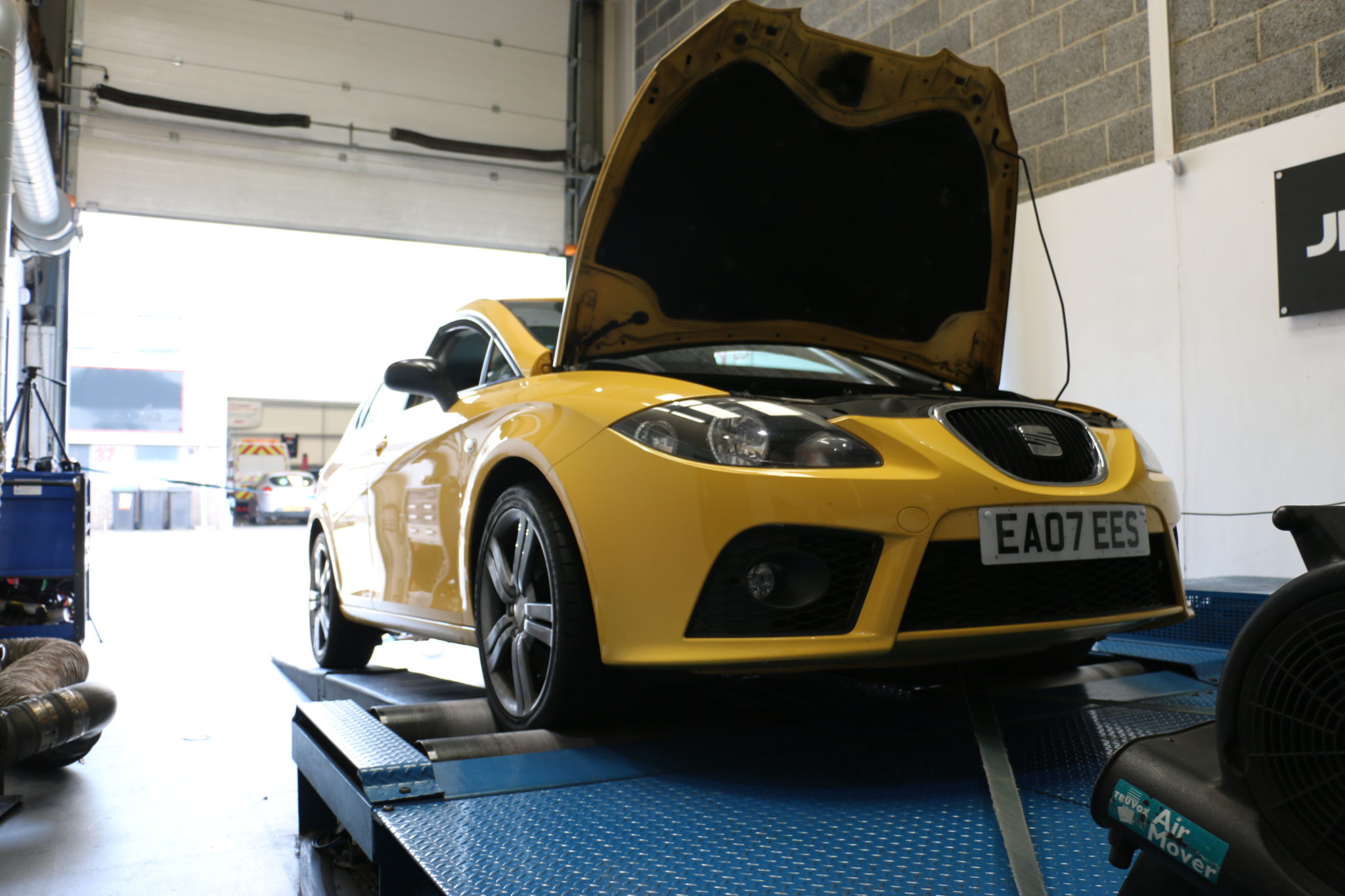
7 photos of this Audi in our Maidstone workshop. Tap any to enlarge.


Questions we get asked
What car has the BWA engine?
The 200PS 2.0 TFSI BWA was fitted to the Mk5 Volkswagen Golf GTI and the Mk2 Seat Leon FR, and the same family of engine appears across Audi, Seat and Skoda of that era in various outputs. It is the most common 2.0 TFSI of the period and the one with the best parts availability.
Is the BWA 2.0 TFSI reliable?
It is a strong engine with two known failure points. The PCV breather valve fails and can pull oil through or cause running faults; Forge Motorsport do a delete kit for around £60 to £70. The diverter valve dumps boost when it fails, and either a later VW revision at around £40 or a GFB DV+ with a brass piston at around £110 fixes it for good. Cam followers and chain tensioners are worth checking on higher mileage cars too.
How much power does a BWA make remapped?
Software alone on a healthy standard car takes it from 200PS and 280Nm to around 240PS and 360Nm. That is the figure we hold in our catalogue for the Mk5 GTI.
What should I fit first on a budget 2.0 TFSI build?
Service it properly first, with the right VW spark plugs rather than cheap copies, because ignition timing is power. Then the two failure points. After that an induction kit to get the intake off the top of the engine, a larger intercooler (an Audi S3 core is the cheap way, under £300 new), and a decat downpipe, then a map written around what you have fitted.
Is a cheap eBay downpipe worth it?
We tried one while writing this up. The fitment was so poor the brackets had to be cut off and rewelded in the right place by an exhaust fabricator. It was £90 and it is not a part we would put on a customer's car. Buy a known brand if you want it to last.
What plugs and oil should a BWA have?
Genuine VW spark plugs, not eBay copies, and a good 5W40 such as Millers. A full service including plugs is around £100 if you do it yourself, and it is the single most cost-effective thing you can do before any tuning.
