 0% finance available

















Power is not measured directly. A dyno measures torque and engine speed, and power is calculated from the two: multiply torque by rpm and divide by a constant. That is why the same engine can be quoted at three different numbers depending on the unit used, and why a peak power figure on its own tells you very little about how a car actually drives.
A dyno can only accurately measure torque at the wheels, horsepower is a calculation of torque and RPM, and the flywheel horsepower figure is a calculation based on drivetrain losses. Whilst this all sounds very very boring, it’s pretty important to understand this when choosing a tuner based on their previous results as not all dynos are equal, and not all flywheel calculations are the same. Here’s how we go about calculating horsepower.
What are drivetrain losses?
Your engine looses power through the drivetrain – I mean think about it for a second, thats a huge amount of effort to move two differentials, a prop shaft, four driveshafts, four wheels, all the internals of the gearbox, the clutch assembly AND the flywheel! That’s an awful lot of metal that the engine has to move before it even gets to putting the power onto the tarmac! Drivetrain losses are usually measured in a percentage format.
How do we work out BHP from WHP?
Two parts to this – first we take the wheel horsepower figure (WHP) that the car has made on the dyno. BHP-WHP= Horsepower Loss. We then divide HP loss by BHP and multiply by 100 to get our drivetrain loss percentage.
So what do we do with all of that then?
First up we need to know what each type of drivetrain consists of, and roughly where we need to be;
* FWD car around 16-17% loss (Flywheel, Clutch, Gearbox, Driveshafts, Wheels)
* RWD car around 23% loss (Flywheel, Clutch, Gearbox, Propshaft, Diff, Driveshafts, Wheels)
* 4WD car around 27%-30% loss (Flywheel, Clutch, Gearbox, Front Diff, Front driveshafts, Propshaft, Rear diff, Rear driveshafts, Wheels)
With these numbers in mind we can usually work out if a car is making correct power stock, and use this drivetrain percentage loss to work out the tuned gains.
Why is all of this relevant to me?
We often see claims that other tuners can get more power from a vehicle. A little research has shown us that some UK tuners are using as much as a 25% drivetrain loss on FWD vehicles!
How would this affect my dyno results?
A 180BHP VW Transporter dyno’d in at 152WHP. If we run a drivetrain loss of 17% it works out at around 183BHP, so that’d sit about right….however if we alter this drivetrain loss to 25% we then get 203BHP! A gain of 20BHP at the flywheel…yet no extra power?
Why would people do this?
Power figures sell tuning. Every owner has got a power figure in mind, and you’ll always go to the guy who’s making the best figures right? If I tell you we can get 250BHP out of your car, and the next guy says he can get you 280BHP for the same price, then you’d go for it.
Isn’t this just excuses from you guys for not being able to get the same figures as everyone else?
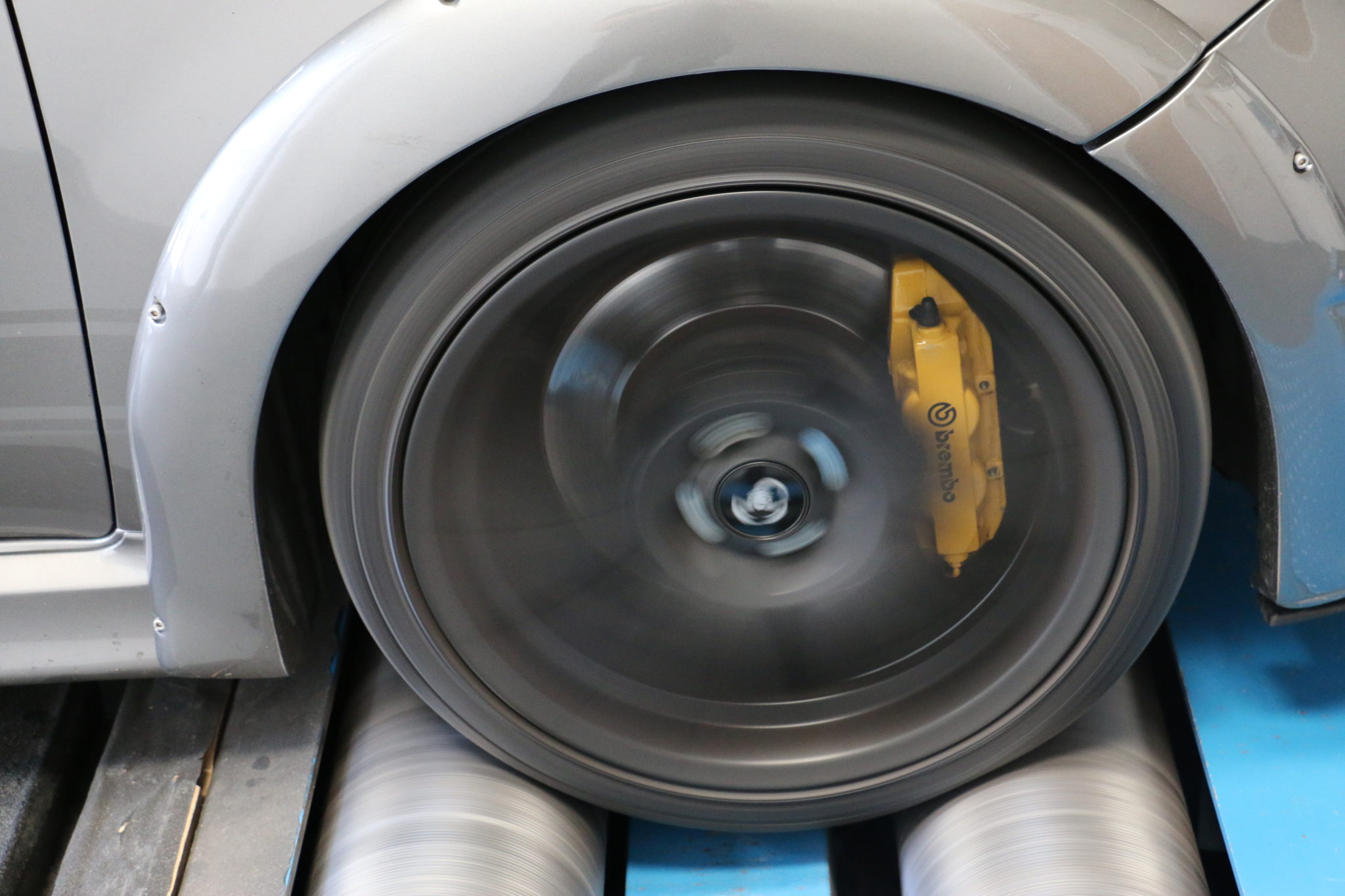
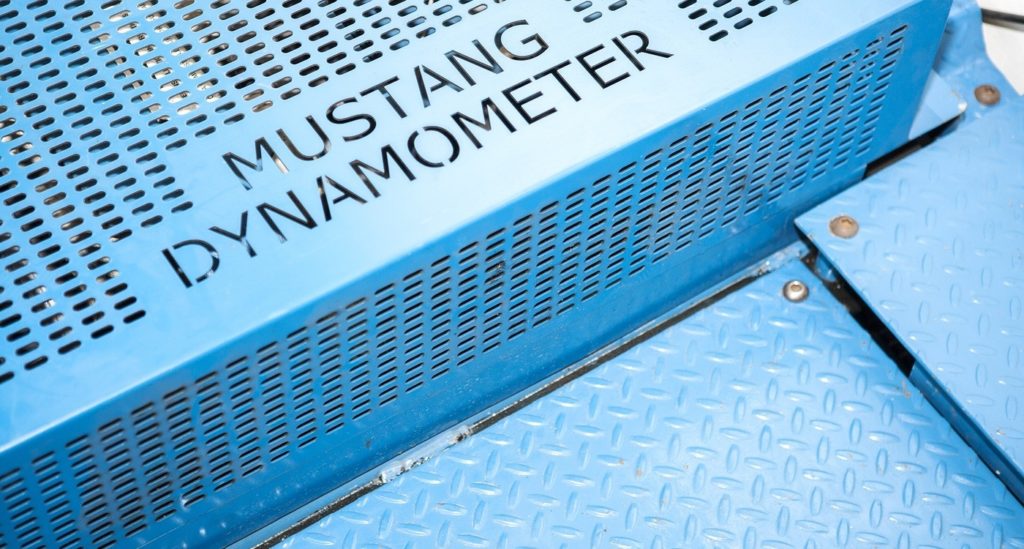
Nope. We run a Mustang dyno, which is very very strict in the first place. We then manually calculate drivetrain losses to ensure accuracy. As a result we KNOW the JFA tuned cars will make the right power on any dyno anywhere in the country.
We’ve seen a lot of people show up for dyno days, then claim the dyno is broken when their car produces 100BHP less than they saw on their tuners dyno – you then strap an identical car down from a reputable tuner and have it make the claimed numbers. The dyno can log throttle position on most cars, so there’s cold hard proof the owner has been lied to about what his car is capable of.
We also have a weather station in the front of the dyno cell monitoring humidity, and air temperature – allowing us to offer a weather corrected figure, so the figure we give you is the power it’ll make on average. Not on a cold day, not on a hot day, just a straight realistic answer as to what your car will make.
If we send a car out with 400BHP, and the owner takes it to Santa Pod and gets beaten repeatedly by 300BHP cars it really doesn’t reflect well on us…and it’s the same if our customers take their car to a dyno day at another centre and make significantly less power than our printout shows.
It’s just best to be honest – if the car doesn’t make the power you wanted, we’ll offer advice on how to get there!
What to look for?
When choosing a tuner, ask to see a dyno graph of a previous car they’ve tuned. Make sure it shows the wheel horsepower figures, and the flywheel horsepower figures.
BHP-WHP= Horsepower Loss
HP Loss ÷ BHP x 100 = drivetrain loss percentage
* FWD car around 16-17% loss
* RWD car around 23-24% loss
* 4WD car around 27%-30% loss
The WHP figures are whats important – and solid proof of those, flywheel numbers are at best an educated guess. Both the C63’s shown on the dyno graph below had been confirmed at making the same flywheel power by two different tuners…the lower performing car is over 100WHP down on power, and had had the rev limiter raised to 7,100rpm to give the impression that the car was making more power. You really do get what you pay for in the tuning game;

If in doubt, drop us an email – we’re always happy to go through figures with you & can advise what we usually get from your particular make/model of car.
Photos from the build
3 photos in our Maidstone workshop. Tap any to enlarge.

Questions we get asked
How is horsepower calculated?
From torque and engine speed. In imperial units, horsepower equals torque in lb-ft multiplied by rpm, divided by 5,252. In metric, kilowatts equal torque in Nm multiplied by rpm divided by 9,549. A dyno measures the torque and the speed; the power figure is arithmetic.
Why do bhp, PS and kW give different numbers?
They are different units for the same thing. One PS is about 0.986 bhp, and one kW is about 1.341 bhp. So a 300PS engine is around 296bhp and 221kW. Manufacturers quote whichever is standard in their market, which is why the same car appears with different figures.
Why do torque and power always cross at 5,252rpm?
Because of the constant in the imperial formula, not because of anything happening in the engine. On any graph plotted in lb-ft and bhp the two lines meet at 5,252rpm. It is a unit artefact, and a useful way to spot a graph that has been drawn rather than measured.
Is wheel horsepower the same as flywheel?
No. A rolling road measures at the wheels, and some power is lost through the gearbox, driveshafts and tyres. The flywheel figure adds an estimate of that loss back on. Both are legitimate; what matters is that you compare like with like.
Why does peak power matter less than people think?
Because you spend almost no time at peak rpm. What you feel on the road is the area under the torque curve in the range you actually use. A remap that adds torque from 2,000rpm changes the car far more than one that adds ten horsepower at the red line.
Can I trust a dyno figure I have been sent?
Only alongside the conditions. Air temperature and pressure, the correction factor, tyre condition and the type of dyno all move the number. That is why we run cars before and after on the same machine on the same day: the comparison is what is meaningful.
