 0% finance available












We remap the whole Ford range, from the Fiesta and Focus ST and RS through to the Transit and Ranger. The EcoBoost petrols and the TDCi and EcoBlue diesels all respond well, and the vans in particular gain a lot because Ford sells the same engine at several outputs: a 105hp Transit Custom EcoBlue and a 170hp one are the same unit with different software. Every figure we quote comes from our own dyno data for that engine.
Ford covers everything from a 1.0 EcoBoost Fiesta to a 2.0 EcoBlue Transit working for its living,
so “what does a Ford remap give you” depends entirely on which one you have. The short version: the
diesels respond in torque, the EcoBoost petrols respond in both, and several of the newer ones are
locked from the factory – which is why some tuners turn them away.
The locked ECUs are the real dividing line
From roughly 2019 onward Ford moved to control units that cannot simply be read through the OBD
port: Siemens/Continental SID211, SID212 and SID212 EVO on the diesels, and
Bosch MD1 units on the newest vans. A lot of workshops will tell you these
“can’t be done”. They can – they just need the right equipment and the right method,
which is either a bench read or an unlock first.
We will tell you from your registration which unit you have and how it has to be read, and we
will say so plainly if yours is one we cannot do.
Vans and commercial
This is where most of our Ford work is, and where the numbers are most worth having – a van
that is not straining pulls better loaded and generally uses less fuel doing it.
- Transit Custom tuning – 2.0 EcoBlue, 2019-2026, including the 2024-on vans. Also covers Ranger.
- Fleet tuning – several vans in a visit, files kept on record
Worth knowing: within a generation the lower-output vans gain the most. They share
their hardware with the more powerful versions and are separated by software, so the cheapest van in
the range is usually the one with the most left in it.
Cars
The Focus, Kuga and Mondeo share a lot of engineering with each other and with the commercial
range – the 2.0 TDCi and EcoBlue diesels in particular. The EcoBoost petrols, from the 1.0
three-cylinder up, respond well and are popular with owners who want the car to feel quicker without
touching the hardware.
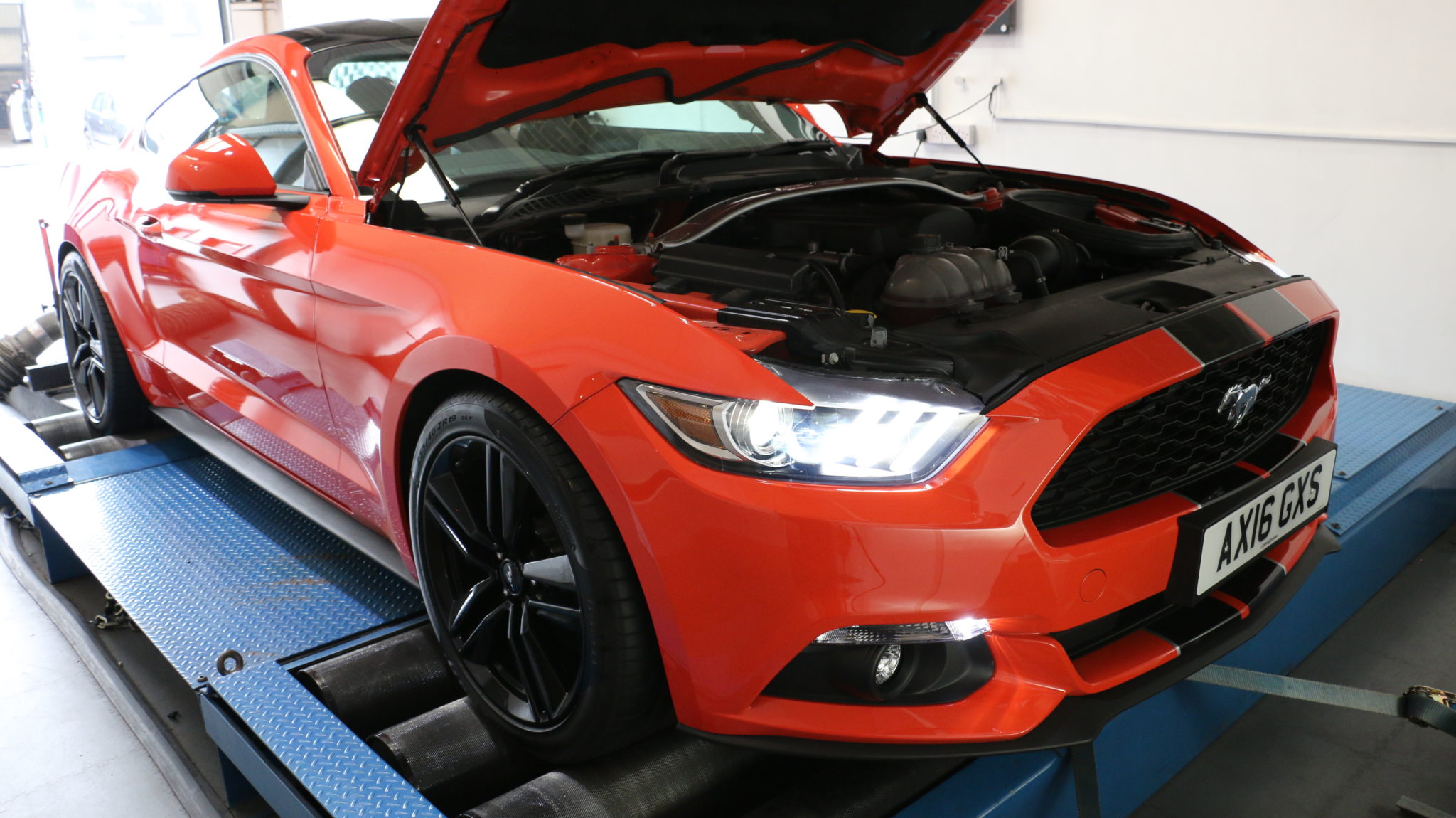
The Mustang is a different conversation again, and one we are happy to have.
Gearbox as well as engine
On the automatics, a good deal of what owners dislike is gearbox behaviour rather than engine
behaviour – holding gears, lazy kickdown, hesitation pulling away. That is a separate control
unit and can be recalibrated on its own, often alongside the engine map.
Servicing and parts
How we do it
Every vehicle is mapped and then verified on our own 2000bhp Mustang 4WD linked dyno at our
workshop in Maidstone, Kent, with 30 years’ trade experience and 2,200+ reviews behind us. Send
us your registration and we will tell you which engine and ECU you have, and what is realistic for
it.
Focus owner? See Ford Focus tuning for the model-by-model figures.
Photos from the build
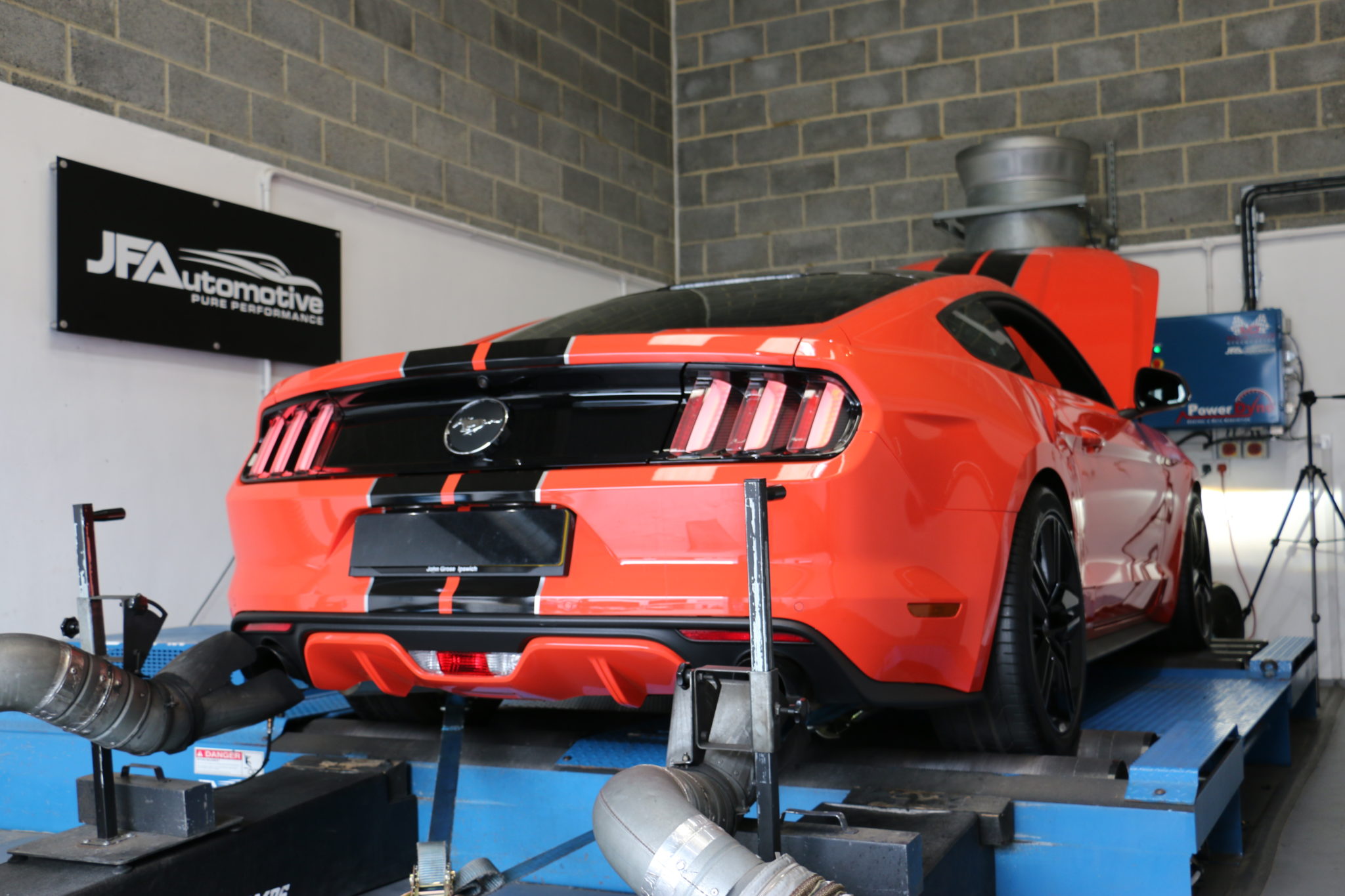
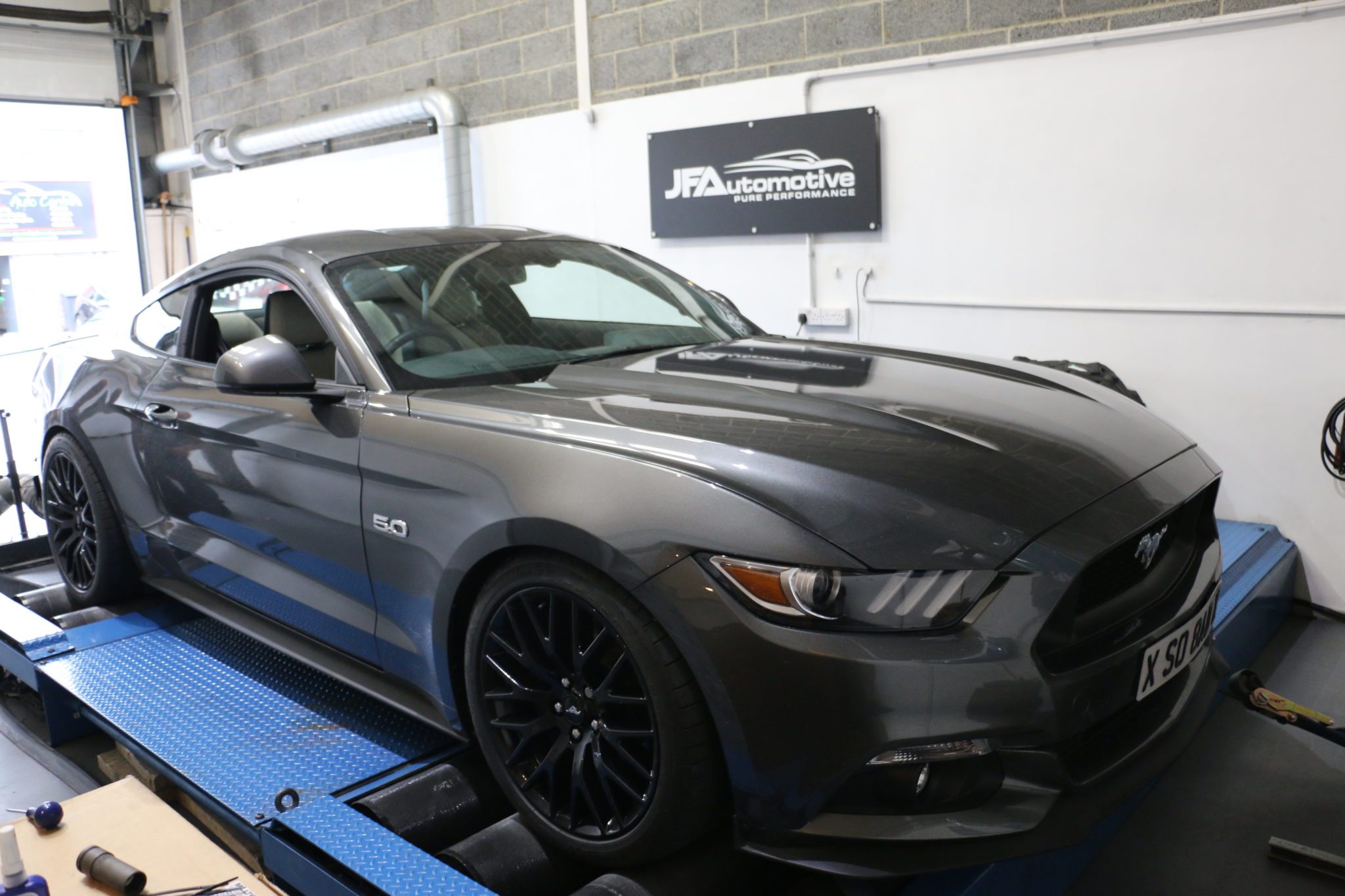
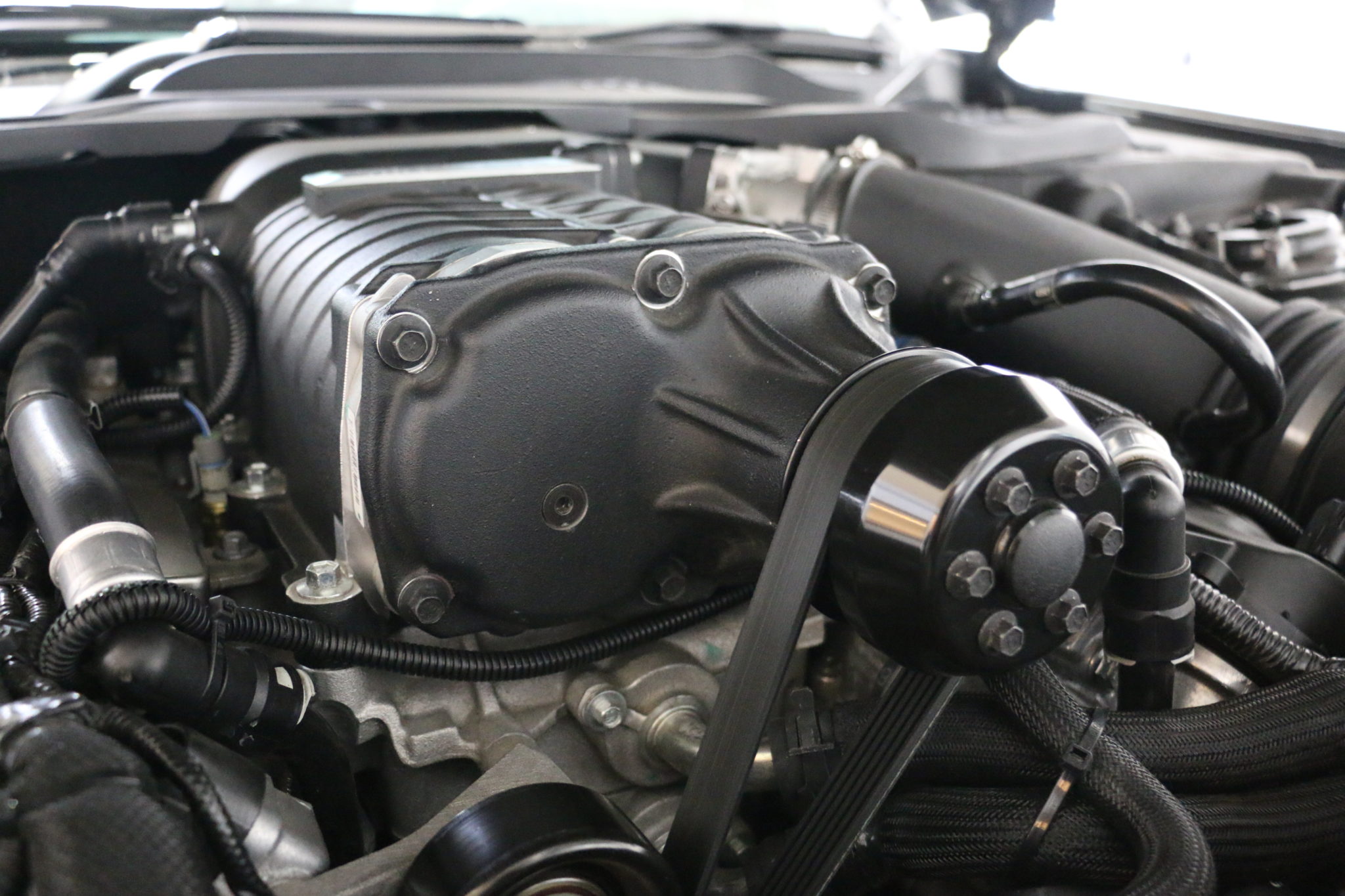
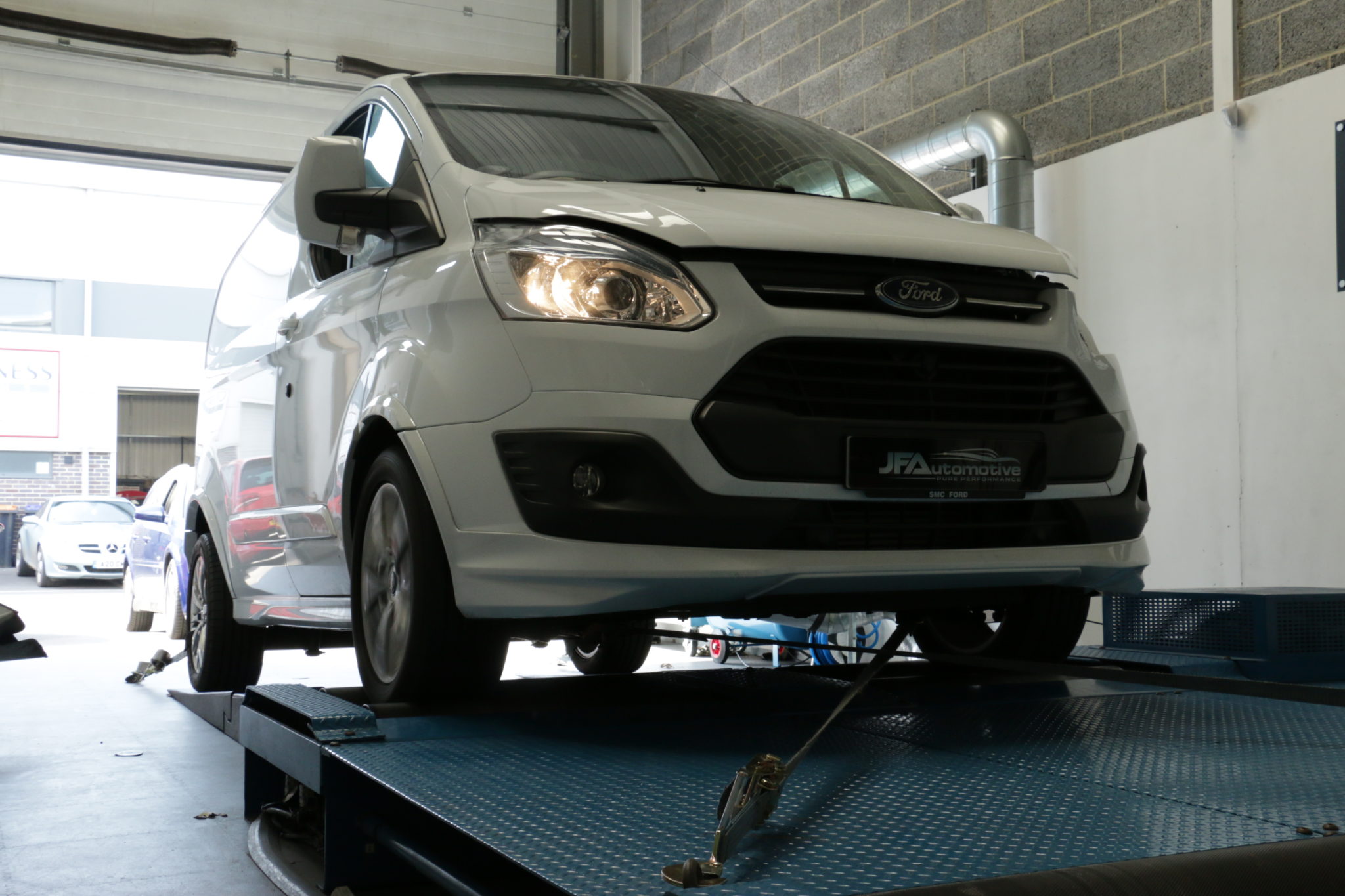
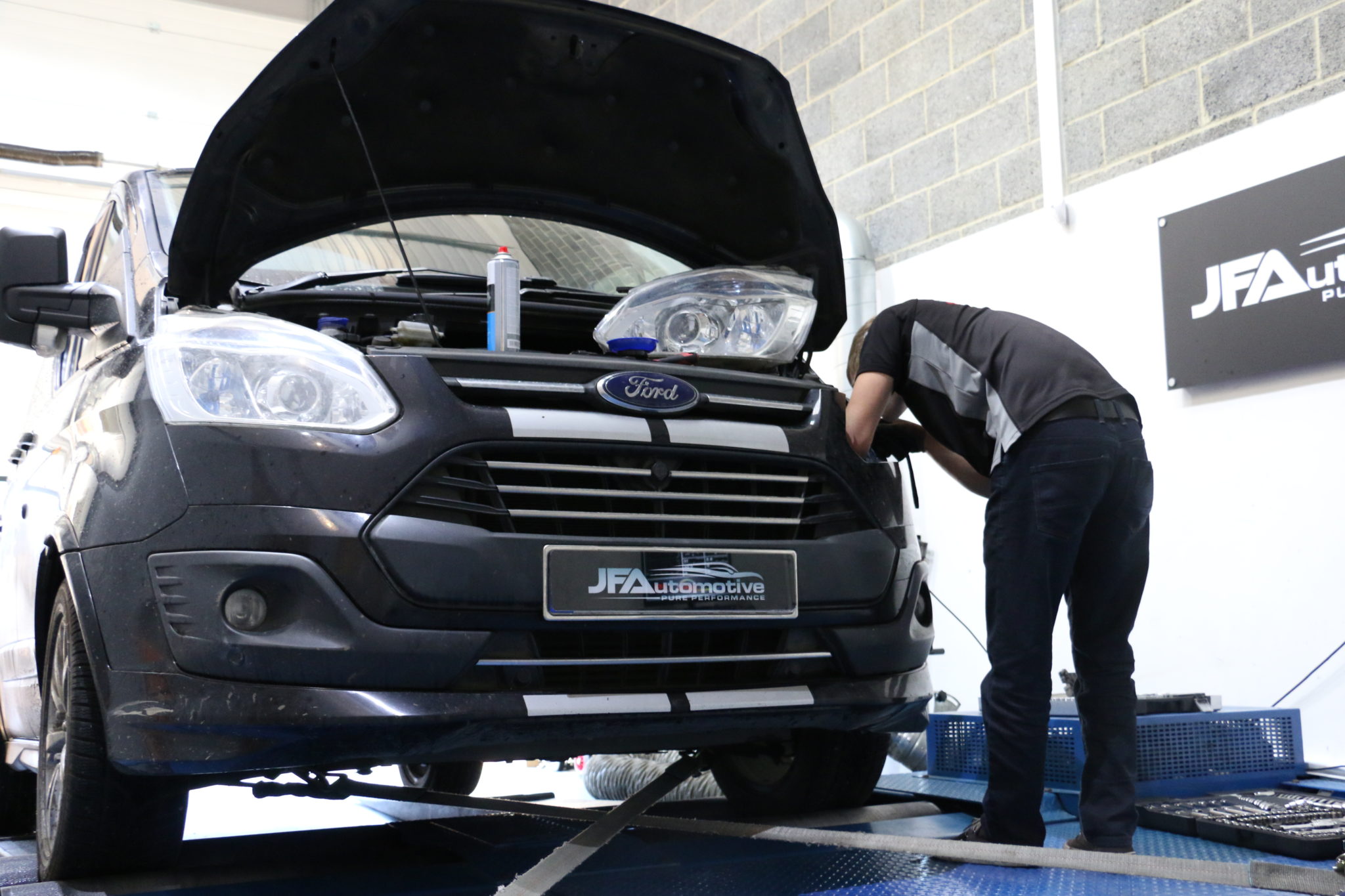
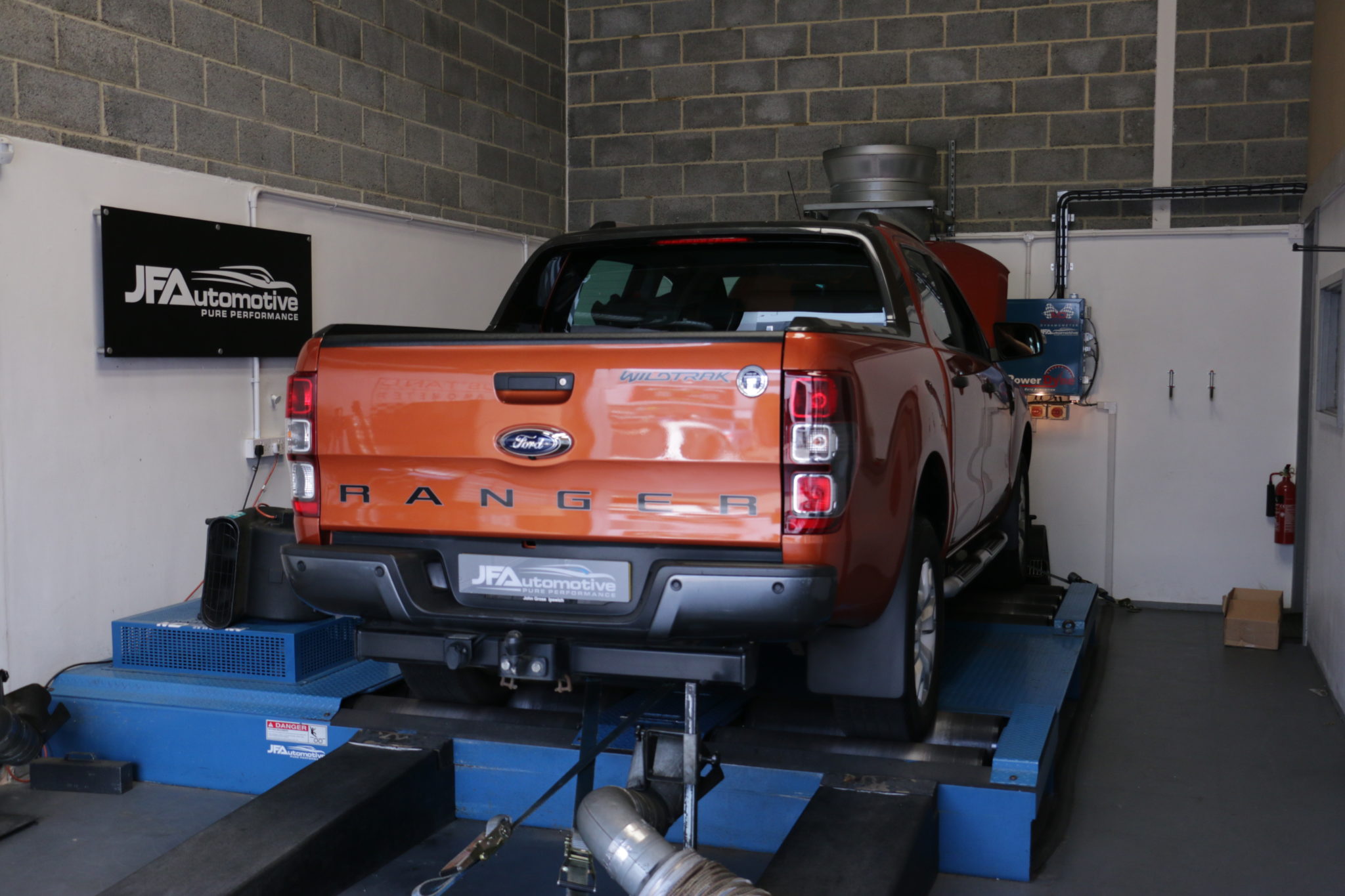
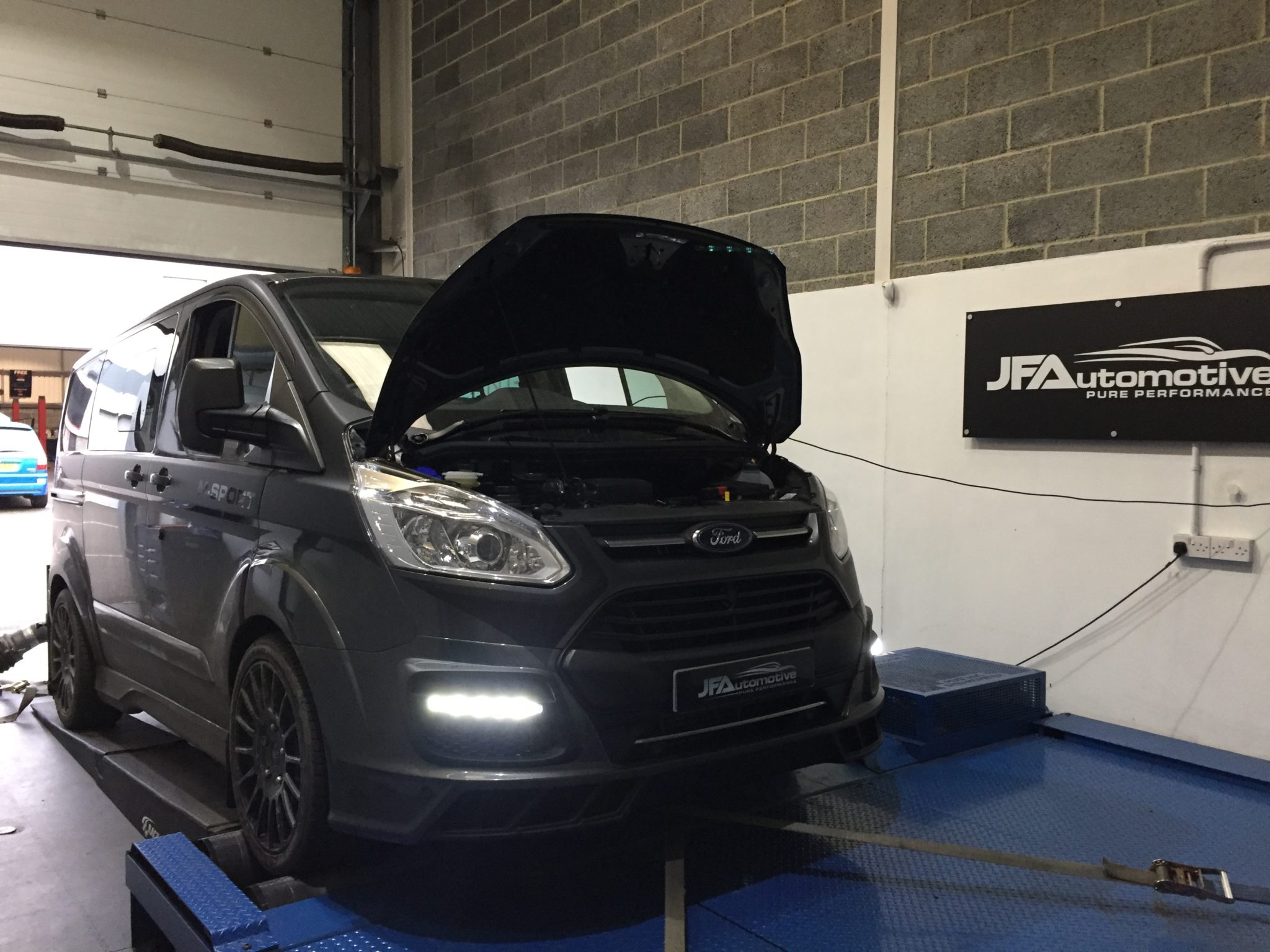
8 photos of this Ford in our Maidstone workshop. Tap any to enlarge.
Questions we get asked
How much power does a Ford remap add?
It depends entirely on the engine. A modern EcoBoost or EcoBlue typically gains 20 to 30 per cent on power and more on torque. The low-output vans gain far more than that because they are so heavily restricted from the factory. Put the registration in and we will give you your car's figures.
Do you tune Transits and Rangers?
Yes, and they are some of the most worthwhile cars we do. A 105hp Transit Custom is the same 2.0 EcoBlue as the 170hp version, so the gain is large and the drivability change is bigger still if the van is worked hard or towing.
What about the Focus ST and RS?
Both respond well. The ST gains properly at Stage 1 and takes a downpipe and intake at Stage 2; the RS is a strong engine with real headroom. We will tell you what is realistic for yours before you commit to hardware.
Will it affect the DPF or the warranty?
The DPF stays: removing it makes the vehicle illegal on the road and fails its MOT. On warranty, a dealer can detect a remap and may decline a related claim, so we keep your original file and can put the vehicle back to standard before a visit.
Does it help fuel economy on a van?
Usually yes on a steady run, because the engine works less hard for the same speed and can pull a gear higher, which is why fleet and towing customers ask for it. Driven harder it will use more.
How long does it take?
About two hours through the diagnostic port, including a road test. Some units need a bench read, which we do here rather than sending them away, and we will tell you which yours needs before you book.
